What will it take to notice a powerful God at work?

Do miracles still happen these days, or did miracles only occur in Biblical times?

Like the story of Jesus turning the contents of a young boy’s lunch into plentiful food for more than 5,000 people. That sort of miracle.

I needed to know, because I was in need of a miracle.

I had driven nine hours east, not knowing exactly what I would be grappling with. My 89-year-old mother was to be discharged from the skilled nursing unit and could not return to her two-bedroom apartment. She needed down-sizing into an assisted living arrangement – NOW! An unscheduled, huge endeavor; a seemingly insurmountable task. How could I do this?

It will take a miracle to pull this off.
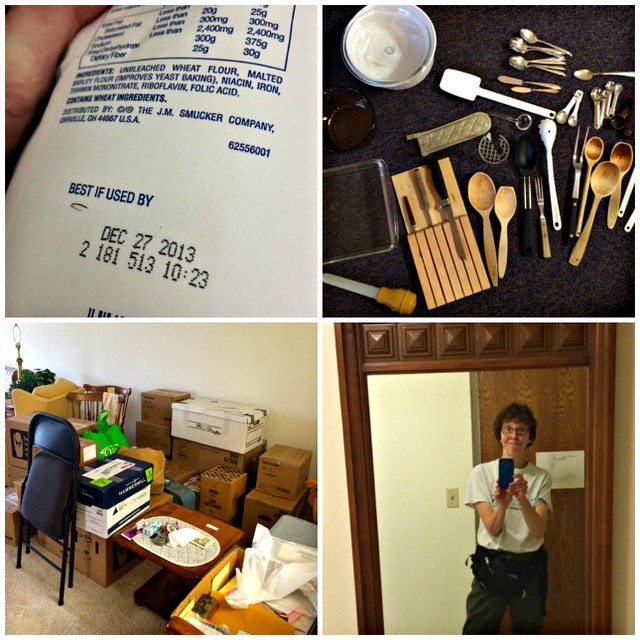
a collage of moving chores

Decisions, decisions… Donate, keep or toss? Lots of text messages flying to family members afar: “This mirror is up for grabs.” “Anyone need any kitchen stuff?” Yikes! How will it all fit into a much smaller space?!

I was operating under a time-crunch and not sleeping much… a situation which could be incredibly straining. Since I tend to be a glass-is-half-empty sort of person, I was surprised to find myself not excessively alarmed. Instead, I made it a point to daily set my intention…

Take notice; a powerful God is always at work.

It started the next morning with a nature-note from God. How did I miss seeing bright, red tulips outside her old apartment? A hopeful reminder springing-forth. God clearly saying, “I am about to do something new. It is beginning to happen even now. Don’t you see it coming?” (Isaiah 43:19)

The God-at-work memos continued… When the box supply dwindled, a thought just popping into my head: Load her luggage with no-longer-needed pots and pans. Storage here they come!

how it would go back togetherAnd, hey! Here’s another useful idea: I can snap a photo to later remember how furniture assembles.

I was hundreds of miles away from my usual cadre of companions. A chance to hire helpers… but would they require too much direction to be useful?


a helper packs boxesmoving day

Unfounded! A smooth, nothing broken, nothing lost move!

Because I was watchful for God at work…

  • I was attentive to precisely planted pansies — God throwing in plentiful gentle reminders of his presence. A reinforcing boost!
  • I was grateful for cousins who shared a Sunday afternoon of their spruce-up talents to make mom’s new place look homey.
  • I embraced chances to squeeze in visits with my mom, thankful that age had not diminished her brainpower as I listened to family stories.

Assisted living sign  

I began to see a miracle happening, both within me and around me.

A miracle can be described as a moment when, as a result of an unexpected and surprising occurrence, one becomes aware of the presence and power of God at work.

But first, I had to take notice.

What will it take for your family to recognize God at work?
I’m willing to bet that once you start looking, you will see!
Can you add the reporting of such instances to your family dinner table, or perhaps your bed time routine?

By choosing to notice glimpses of God, I saw him all over!
And there were many miracles.


Photo credits:
Photos from my archives.

Are you seeing ads? They are not from me! They are placed by WordPress, who otherwise offers a free platform from which to share lots of good-ness. If you see an inappropriate ad, please report it to support@wordpress.com. Include the URL, the date/time the ad appeared, and a screenshot of the ad.

What sort of fascinated fan are you raising?

Young sports fanAre you raising a “Go Blue” sports fan? (Or perhaps a “Go Green”?) If you are a fan of a certain team, it’s very likely that your kids are too.

You are probably not intentionally raising such a child – drilling the Michigan fight song every night or teaching them player nuances – it just sort of happens doesn’t it? Because you are interested, they become predisposed.

What about raising a Jesus fan?

Is that just “happening” in your household without any effort on your part?

I’ll admit, when my kids were young, I did not focus much on raising them to be disciples of Christ. My thinking went along the lines of:

  • Who me? I can’t do that. (That’s the church’s job.)
  • I don’t know enough. (I didn’t go to Bible school.)
  • I’ll screw them up / turn them off to religion. (I’ll probably say something wrong!)
Raising a Jesus fan takes some intention.

Does it help you to know that Jesus struggled with the role he was to play in God’s plan of redemption for the world?

We see it prominently in the Garden Of Gethsemane, the spot where Jesus and his followers went after the Passover meal (the one we now call the Last Supper). Jesus knew he faced imminent distressing events — arrest, torture, and death on a cross. At this critical juncture, Jesus is compelled to spend time with God in prayer.

Spend Time in Prayer.

Share your feelings of uncertainty with God. Jesus did. Matthew describes a time of intense agony in amongst the olive trees, with Jesus’ words expressing his anguish:

Open quote markMy Father, if it is possible, take this cup of suffering away from me.

This is like Jesus saying: “If it is possible, can’t we do this in some other way?”

Christians believe that in Jesus, God became fully human; he was a human being who faced temptations and feelings of anxiety! Isn’t it freeing to realize that we don’t have to stand up to pressures and trials with super-sized strength? It is okay to be fearful, questioning, angry, and to feel agony.

It is okay to struggle!

We know from the prayer that Jesus prayed in the garden, that in the very same sentence of asking for a different path, Jesus turns and submits completely to God, “I want your will, not mine.” This is not an admission of defeat; he says it with a cadence of perfect trust.

Acting as Jesus did can be a tough pill to swallow. Here’s what I tell myself when faced with something I’m unsure I really have the guts to do:

Do the next thing. Do it with prayer.

a blue line

Here’s something to pursue this week: Be on the lookout for a “trigger” which prompts a short burst of prayer.

A collage of green thingsTaking a cue from the Garden of Gethsemane, when you see something green (a houseplant, some produce, a stray toy) thank God for the ability to speak openly with him in prayer!

Try this out yourself for a couple of days. Then report back to your kids. Get them onto the hunt for a little green prompting.

What spiritual practice can you include in your family’s life this Lent? How will you plant seeds of faith in the lives of your Jesus fans?

Stay tuned for other Lenten prayer hints.


Photo credits:
Young sports fan by PublicDomainPictures, and the collage of green things – from other artists – all who licensed these photos on Pixabay under a Public Domain Dedication.

Are you seeing ads? They are not from me! They are placed by WordPress, who otherwise offers a free platform from which to share lots of good-ness. If you see an inappropriate ad, please report it to support@wordpress.com. Include the URL, the date/time the ad appeared, and a screenshot of the ad.

How quiet contemplation revealed a hidden need?

purple paramentsWith the start of the season of Lent, a sharp-eyed churchgoer/church on-line watcher will spot changes in the Sanctuary. Ask your family members what they notice. First up, the colors have switched! The purple paraments are back. (Paraments are the hangings that adorn the pulpit, or the extra “garments,” the stoles the clergy wear. Did you know that each season of the Church Year has a different color?)

Wonder with your family: why purple for Lent?

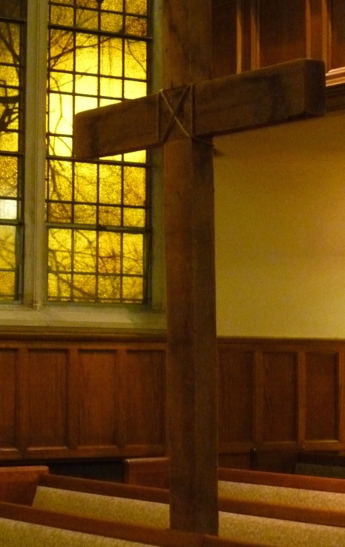
cross in the sanctuary on Ash WednesdayAnd secondly, the empty, “old rugged cross” is back… watch it progress slowly—week to week—on it’s Lenten journey from the back of the church all the way to the front.

Do you wonder what if it blocks your view in church?

Discuss with your family what the recurrence of this on-the-move cross says to you.

Both of these alterations are relatively innocuous.

Or are they signals of something bigger? Something like…

Hey, it’s Lent! It’s time to intentionally put God at the center of your life.

But how is that suppose to happen?

Going into Lent I was conflicted. I knew that I needed/wanted to “do” something specific to mark my travel through Lent, to turn my thoughts toward the reason why Easter is important… but I wasn’t sure what to do. Give something up? Take something on? Then I got my answer at last night’s Ash Wednesday worship service.

It was a Taizé style service, consisting of meditative, repeated songs and scripture interspersed with periods of silent contemplation.

And in that quiet… I found peace.

Ah ha! I needed an injection of peace—some sacred time.

I needed to pull back from my day-to-day stuff and experience the divine.

imparting ashes on Ash WednesdayAt this service there were the sacred rituals of the sharing of bread and juice in Holy Communion, and the imposition of ashes—the part where “dust” gets etched onto our foreheads with the words, “Remember you are dust and to dust you shall return. Repent and believe.”


Lent begins with this sign—ashes. The ashes are symbolic of death. I need to let my old ways die. I need to try something new.

So I went home and created an “altar.” On an old board I placed a few “special” rocks, a sprig of fake flowers, a pinch pot made by my son when he was 5 years old… It is a place for me to linger, to allow my soul to be in quiet contemplation.

I plan to add and subtract from my holy space as I feel the whim. I plan to “visit” every day.

Lenten altar

How will you create your sacred Lenten space?

--------------

Photo credits:
Copyright photos from my archives.


How to respond to the in-your-head monologue with grace?

God loves us even when we screw up.

I don’t know why, but this always amazes me. Really? God is still willing to take a chance with me? In spite of my crummy choices?

It’s not what I typically tell myself. My internal dialogue runs along the lines of…

  • I can’t risk that. I might fail.
  • I can’t do that. I’m not good enough.
  • Who do you think you are, that people should do as you suggest?

But God keeps trying to help me replace this grinding, degrading voice. God reaches out to me, reminding me again and again, with a message of grace-filled love:

I’ll give you another chance.
Try it. I’ve got your back.
Hold my hand when you are afraid.
You are mine. I love you!

In our Rotation on the Parable of the Prodigal Son, we hear others suffer from wounding self-talk:

  • The younger son was telling himself a story: “I am no longer worthy to be called your son” (Luke 15:21b).
  • The older son also had a story: “All these years I’ve been slaving for you and never disobeyed your orders. Yet you never gave me even a young goat so I could celebrate with my friends!” (Luke 15:29).

Jesus shows us how God responds to these storylines:

It’s not about deserving; it’s about receiving.
Open your heart to receive my gift.
It’s all about grace.

Can grace guide us to counterclaim our hurtful head-chatter?

a gift is brought by a little bird

Perhaps you have heard it said during a Baptism:

All this is God’s gift to us, offered without price.  [1]

Grace is a free gift from God. There is no way to earn God’s forgiveness. Sins can’t “go away” by performing lots of good deeds to make up for the bad ones. Grace is God doing for us what we can’t do for ourselves.  [2]

What story are you telling yourself?
Try changing the words you say to yourself; make it be your remade mantra.

God loves me no matter what. Can I treat myself the same way?

Grace isn’t only a truth about the way God operates; it transforms us. As we open up to God’s continuing offers of grace, we can find ourselves responding by becoming more Christ-like in character and conduct; more loving… even towards ourselves.

-------

[1] The Services of the Baptismal Covenant are found in The United Methodist Hymnal.
[2] I don’t know who first said that but it sums it up nicely don’t you think?


Photo credits:
A delivered gift by LaughingRhoda, who licensed this photo on Flickr under a Creative Commons License.

Are you seeing ads? They are not from me! They are placed by WordPress, who otherwise offers a free platform from which to share lots of good-ness. If you see an inappropriate ad, please report it to support@wordpress.com. Include the URL, the date/time the ad appeared, and a screenshot of the ad.

Did Jesus storytell to shock his audience?

Perhaps Jesus hoped that encountering an unexpected twist — something that caused us to gasp in surprise — would lead us on a fresh approach to life? His first century listeners were likely astounded by the telling of the Parable of the Prodigal Son, but are we?

Jesus frequently taught with a genre called a parable. His parable storytelling employed examples from everyday life – farming, feasts, and families. Jesus used parables to teach a lesson that had a hidden message. Theologian Barclay tells us that a parable was “an earthly story with a heavenly meaning” [1].

The “earthly” part: your typical messy family with teenagers who want their own way. So what is the “heavenly meaning” behind our current Rotation story? What is Jesus hoping that we hear?

Not surprisingly, to extract this unrevealed explanation requires contemplation! So dig right in! Gather your family around and discuss. Reflecting on this parable will likely challenge your thoughts about how God works; the nature of God’s grace!

A sign with a fist says I want it now!When we hear the story of the Prodigal Son, does any portion of it bring you to a complete stop?

Does it bother you that the youngest son asks his father for his share of the estate? (After all, it was as if he were saying: “I wish you were dead so I could have my money.”)

We’ve heard it expressed from our kids (and even from adults?): I want it now!

Jesus’ first listeners were likely waiting for the father to put this nervy son in his place. But surprisingly, the father generously divides his property between his two sons! What is happening here?

Does it bother you that this son then leaves home and goes out and spends lavishly and earns the title: Prodigal Son? (A prodigal being a word most frequently associated with reckless and wasteful spending.) He has sinned big time, with underlying transgressions: broken relationships and alienation from his home community (because you can be sure that the whole town heard about his choices).

Does the father try to stop him? Nope.

And when he sees the light and comes back home (with his tail between his legs) does the father lecture with “I told you so!”?

Prodigal Son banner

No! The father runs to greet his wayward son! He throws a welcome home party! He shows love and compassion rather than judgment and condemnation!

Ah, here comes a hint of the hidden lesson of this parable – allegory is at work — This father represents God!

Is this how God works?

Yep. This surprising story twist helps us see that regardless of the offense, there is always forgiveness and grace from God! Pretty shocking isn’t it?

a blue line

Discuss this story at the family dinner table, or wherever your family is gathered. (In the car?) Start off with reading our story in Luke 15:11-32.)

Ask these questions:

  • What did you think of the way the father reacted when his son came home?
  • Were you surprised? Did you expect him to say “I told you so,” and scold his son for what he did?
  • The son had intended to work his way back into his father’s favor; how does that plan work out?
  • The father doesn’t allow his son to pay him back. No maneuvering or bargaining on the part of the son was required. It’s as if the father is handing him a do-over. Does it surprise you to think that God acts the same way towards us?
  • How do you suppose we can receive this sort of forgiveness from God? (simply by confessing and asking for forgiveness)
  • What shall we do in response to such extravagant love?


a blue line

[1] Barclay, William. The Daily Study Bible Series: The Gospel of Mark.


Photo credits:
I want it now! by Denise Krebs, who licensed this photo on Flickr under a Creative Commons License.
Prodigal Son banner © 2005-2015, SparkleBox Teacher Resources Limited; used with permission.

Are you seeing ads? They are not from me! They are placed by WordPress, who otherwise offers a free platform from which to share lots of good-ness. If you see an inappropriate ad, please report it to support@wordpress.com. Include the URL, the date/time the ad appeared, and a screenshot of the ad.

How to portray grace by bending wire

Child with wire sculpture creationprodigal son art sculpture

In the Art Workshop for our current Rotation, kids are creating grace poses.

What??

After hearing the Parable of the Prodigal Son, they are sculpting with wire or pipe cleaners, a picture of forgiveness and grace in action.

Because that is what the father offered his wayward son: grace.

Surprising isn’t it?

Exhibited behavior by the son has deeply wounded his father.

The father could have replied with rub-it-in-your-face contempt: I knew you’d amount to nothing. I told you so!
He could have displayed disgust: You’re back? Don’t expect a handout from me.
He could have shown a stiff shoulder: Who are you and what do you want?

But instead, he shows love and forgiveness; he grants grace.

This Art Workshop lesson gives kids a chance to visualize and express what it is that grace looks like. I saw hugging, arms out-stretched and bended knees.

What is grace?

Grace is God’s unconditional love that forgives us even when we mess up.
We deserve the worst, but we are offered an escape route. A do-over.
And it’s a free gift!

Explore this concept further in your family unit. When your child brings home their wire sculpture, ask them if you can play with it. (You may need to remove the staples holding the figures in their current pose.) Reread the story in Luke 15:11-32 with your child and pause to shape the figures…

  • Read Luke 15:11-13. Show the scene of the son leaving home. How do you suppose the father looks? What about the older brother?
  • Read Luke 15:14-19. What would the ah-ha moment look like when the son came to his senses? How do you suppose the presumably waiting and watching father is looking?
  • Read Luke 15:20-24. Shape a scene of grace.
  • Read Luke 15:25-32. How does the angry older brother look?
  • Jesus didn’t provide an ending to this story! Do you suppose the older brother goes to the party? Shape an ending scene to the story the way you think it happened.


Photo credits: from my archives.

Are you seeing ads? They are not from me! They are placed by WordPress, who otherwise offers a free platform from which to share lots of good-ness. If you see an inappropriate ad, please report it to support@wordpress.com. Include the URL, the date/time the ad appeared, and a screenshot of the ad.

Should Epiphany only be celebrated in the dark?

A beautiful blue sky day in winter

Happy Epiphany! Such a bright, sunny day—how rare for these parts in winter! How do you plan to celebrate Epiphany?

On Epiphany we remember wandering “wise men” who tracked a star and “followed its glisten and gleam all this way to worship him” (Matthew 2:2, The Voice).

Did you know that the stars are always shining, even in the daytime? It’s easy to forget isn’t it? We need a total solar eclipse to be able to see them, but they are there! Epiphany, with it’s focus on stars, do we have to wait until dark to celebrate?

The word Epiphany literally means to show or to make known or to reveal. It gets this name because the magi had finally reached their long-traveled destination. They were searching for a child, born to be God among us, and they had finally found him! They worshiped Jesus, presented gifts suitable for royalty, and thus revealed to the world that Jesus was a king.

Three wise men on camels ponder a star in the sky
If they were focused on a star, I wonder how the magi navigated during the daylight hours?

Was the star bright enough during the day? Or did they only travel at night? (The Bible doesn’t tell us.)

Was their arrival at our Savior’s doorstep a dark-night happening?

We think of daylight as a time when it is easier to see; to find our way. We label “darkness” as scary and to be avoided.

Can we find comfort in our darkness — the kind that occurs in broad daylight — knowing that the stars are always there?

Light a candle at the dinner table tonight. Think about and discuss ways we can be God’s light helping others along the journey.

--------------
Photo credits:
Bright, daylight photo, copyright, from my archives.
A Star in the East, a painting by W. L. Taylor, 1900, in the Public Domain.

Are you hiding your talents and skills? Take courage!

Third servant digs a hole
After hearing The Parable of the Talents, we pondered what was the most surprising thing we learned.

The hands down winner (in a crowd of 1st graders) was that the third servant chose to bury his “talent.”

 
Indeed, who today would bury something valuable?

I explained that the people who heard Jesus tell this parable would have approvingly nodded their heads when told of this concealing effort. In those days, to bury money placed into your care was considered a secure way of protecting a treasure. This third servant had done what everyone would have expected – gone for his shovel!

Except, according to the parable, the master wasn’t happy with this choice.
What resembled a smart decision, delivered a sad outcome.

How should we be guided by this parable — this story used by Jesus to teach his listeners about living in God’s kingdom?

Don’t bury your talents.

And here we aren’t only talking about the first century use of the word “talent” which referred to a large sum of silver or gold. Our use of the word “talents” encompasses much more — all of our resources including our money, our skills, our abilities, our time, and our stuff! Don’t hide these aptitudes; use them!

Making use of our talents? Easy, right?

What is holding you back? Are you allowing your “inner voice” to control your actions?

Do you explain away your behavior with…

  • I’m too busy.
  • My efforts are too small to make a difference.
  • I’m not ready.
  • I am afraid.
  • What will people think?

I’ve bestowed all of these excuses upon myself. I need a daily reminder to banish my fearfulness.

Everything is a gift.

Today, marks the ten-year anniversary of my near-fatal brain aneurysm. Because of an incredible story of everything happening at just the right moment, and lots of prayer, and skilled medical care, I survived. I received a precious gift: a second chance to do my best with the gifts God has given me.

Yet I don’t always act in this manner. I behave like the third servant in our parable.

Unlike his fellow-workers who were emboldened by the chance to make something of themselves — to serve their master faithfully — this third servant was afraid.

He forfeited opportunities to risk investing his gifts.

God asks only one thing for giving us the gold coin of life: Use what you have to facilitate God’s kingdom here on earth. We are not told how to use our talents, just that we should use them.

How will you make use of your resources, your gifts, your money, your skills, your abilities, and your time?

-------


Photo credits:
An illustration from my favorite kids Bible, The Jesus Storybook Bible, used under an educational fair use category. (Link goes to Ann Arbor District Library holding.)

Are you seeing ads? They are not from me! They are placed by WordPress, who otherwise offers a free platform from which to share lots of good-ness. If you see an inappropriate ad, please report it to support@wordpress.com. Include the URL, the date/time the ad appeared, and a screenshot of the ad.