Have you filled a bucket today?

Updated to reflect newly available publications.

Child at the beach filling a bucket
I learned something new at a family program at FUMC in Ann Arbor, MI.

I learned how to be a “bucket filler.”

Even though this interactive presentation on bucket filling was right after the Easter egg hunt, this wasn’t instruction on how to garner the most chocolate eggs in your Easter bucket basket.

No, this event was about something far more important.


Here’s what I took away:

  • Work to keep my bucket full (by filling other people’s buckets)
  • Don’t be a “bucket dipper”
  • And keep my bucket lid close at hand.

So what’s all this talk of buckets?

It’s all based on the concept that everyone carries around an invisible bucket where we store our good thoughts and feelings about ourselves.

When your bucket is full, you feel great.

When your bucket is empty, you feel lousy.

When we are kind and do nice things for someone, we fill their bucket. In the process of doing “bucket-filling, the gratifying side-effect is that our own bucket gets replenished!

This is a great way to teach kids (even young ones) about the importance of being loving and considerate of other people. To keep your own bucket full you need to either receive scoops of love from someone or ladle love upon someone else.

Jesus told us to be a bucket filler: “Love your neighbors as much as you love yourself.” (Luke 10:27). I’m all for full buckets!

But, don’t be a bucket dipper!

What is not good is “bucket dipping.” When someone acts mean, in the things they do or say (or even simply ignores us!) they dip into our bucket, hijacking some of our happiness.

For kids, this describes bullies, but it also can describe the daily goings-on in our households. How about: “My bucket is being dipped when you don’t pick up your toys as I’d asked.” Or, “I see that both of your buckets are being dipped when you and your sister are arguing.”

What’s with the bucket lid?

This event turned out to be so much more than just another way of looking at the Golden Rule. The presenter from Bucket Fillers, Inc. empowered us to deal with bucket dippers by putting a lid on our bucket! What a refreshing way to visualize protecting your feelings—for kids of all ages.

As I have thought about this bucket concept, it occurred to me that God wants to fill to overflowing, all of our buckets!

Open quote markFrom the fullness of his grace we have all received one blessing after another. John 1:16

God needs us to do the work of filling each other’s buckets. I have just one question…

A bucket full of blessings

-----

Some Bucket-filling Resources:

The book Have You Filled a Bucket Today?This is a great book to introduce bucket filling to your kids; for all ages (even adults!)
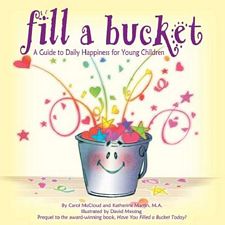
 

The book: Fill a bucketThis one is great for ages birth to 5.


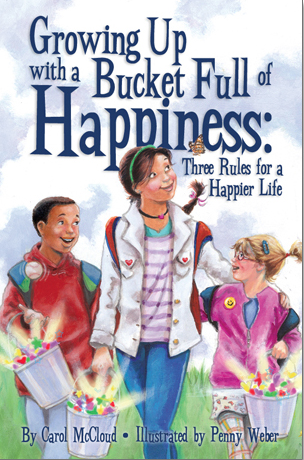
Book - Growing Up with a Bucket Full of HappinessA chapter book for ages 9 and up.


Book - Baby's Bucket BookBoard-book for ages birth to age 2.

Baby’s have buckets too!


To purchase the above books and other products visit Bucket Fillers, Inc.


Photo credits:
Beach photo offered by RJ Bejil, who licensed this photo under a Creative Commons License.

Graphic: “Have You Filled a Bucket Today?” – used with permission from Bucket Fillers, Inc.
Book covers – Not affiliate links (I get nothing for pointing you to the organization Bucket Fillers, Inc. Just trying to point you towards resources.) but these covers do link to the publishers’ web site. This, in my mind, keeps this in the category of fair use for educational purposes.

The Garden of Gethsemane workshops

During the school year, each Rotation for our Cool Disciples (our 1st – 6th graders at FUMC in Ann Arbor, MI) includes six workshops. Here’s the line up for our Rotation on the Garden of Gethsemane.

  • In the Art Workshop kids are creating charcoal drawings visualizing events on the night Jesus was betrayed in the garden of Gethsemane. They are reading the story in Luke.
  • In the Cooking Workshop pretzels are being folded following the practice of a monk 1,400 years ago, who first shaped his dough to represent someone praying. People often prayed at that time, with their arms folded across their chests, each hand on the opposite shoulder. (Try saying your prayers in this manner!) As the pretzels bake, the story is being read from Matthew.
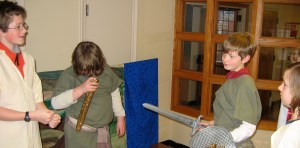
  • In the Drama Workshop the kids read the story in Mark and then enact it (complete with costumes and props). Here’s the 6th grade in action from last week:

  • In the Movement Workshop students hear the story from Luke. After discussion they climb into Body Sox – tubes made of a very stretchy Lycra material. While listening to music they are urged to use their bodies to create expressive movement to depict the retelling of the story. This is captured on video for watching pleasure at the end of the lesson.
  • In the Science Workshop kids are creating little gardens- terrariums. These gardens are not intended to be replicas of the Garden of Gethsemane as they include other symbols of the Easter story – an empty tomb, a rock rolled away, a cross and some flowers. As you care for the garden that your child brings home, talk about the elements of the story. Why is the tomb empty? How about that stone – was it moved away to let Jesus out, or so people could see Jesus had risen from the dead? What does the cross represent?
  • In the Video Workshop students are first reading the story in Matthew and then watching portions of the video The Visual Bible: Matthew. They are watching this live-action video portray Jesus and his disciples first at the Last Supper and then in the garden. This video uses the exact wording from the New International version of the book of Matthew.

What are your children’s reactions to these workshops? What have they learned?


Photo credits:
Photos thanks to Greg Stout.

Are you seeing ads? They are not from me! They are placed by WordPress, who otherwise offers a free platform from which to share lots of good-ness. If you see an inappropriate ad, please report it to support@wordpress.com. Include the URL, the date/time the ad appeared, and a screenshot of the ad.

Preparing for Easter: Notice the sacred in the secular

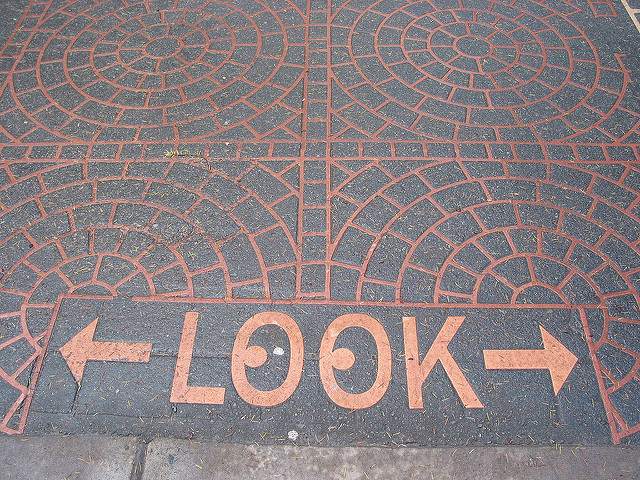
Words on the street warning: look both ways

'How is God calling us to look around with God’s eyes

and see all things sacred, and act accordingly?

This question was posed by Rev. J. Douglas Paterson in a sermon at FUMC Ann Arbor—the first sermon in a Lenten series entitled “Intentionally Christian.”

Intentionally Christian? What does that look like?

In the days of the early church, “Lent” was a time when the focus was on teaching new followers what it meant to be a Christian. It was like a prerequisite class to joining the church! The sermon series “Intentionally Christian” seeks to take this olden-days practice as an example, by asking questions like: “How do we conscientiously and purposefully live out our calling as Jesus-followers?” and “What is God asking me to do?”

In his first look at being intentionally Christian, Doug talked about how we often separate our lives into two facets: the sacred and the secular.

Our sacred life is when and where we practice our faith; it’s when we notice God. We hear ourselves say, “there is Holiness in this moment.”

And then there is the rest of our life, the secular or, the “worldly.” Unfortunately this latter slant is where we often forsake our faith and behave as if God is not involved. We don’t notice God’s presence and in fact, we aren’t even looking!

OK, so there should be no difference in the way we view what is secular and what is holy. That should be easy enough to do, right?

Wrong! I, surprisingly, have found that this can be hard to do! It takes careful thought. It takes being deliberately intentional! (Oh yeah – the title of the sermon series!)

We live in a world that is waiting for us to notice holiness. Share with your family members what mundane aspect of life looked holy to you. And share with all: What have you been noticing lately?

Photo credits:

Look by Travis Nep Smith; licensed on Flickr under Creative Commons (BY-NC 2.0).

To forgive is hard!

Forgiving is hard.

I had forgotten just how hard.

Everyday occurrances are relatively easy to forgive.  Forgive that driver behind me at the stoplight for honking at me so soon after green replaced red?  Done.
Forgive my husband for not telling me he was going to be stopping at the store (and I had a list!) Ahem…Well, ok. Done.
But forgive someone of something that is BIG?

Wait just a minute! Not so fast!

Going into this Rotation about Joseph and his brothers, I was thinking, in these lessons we’ll talk  about forgiveness.   I’ll craft our lessons so that by the end of the Rotation, children will be able to…

  • Tell how Joseph forgave his brothers, and
  • Recognize that God calls us to forgive others.

It is humbling to realize that God is trying to teach me these lessons as well.

When Joseph was sold by his brothers to traders on their way to Egypt, or when Potiphar put Joseph in prison, I'm sure that Joseph felt anger.
Why was it so surprising to me to feel the same way when I got "sold to traders on their way to Egypt?" (Insert the offense in place of what happened to Joseph.)

I find myself continually asking God to help me forgive.
It is not easy.

This just goes to show: this way of teaching our children is definitely adult education (disguised as a children’s program). What have you been learning?


Photo credit: cheerfulmonk
Licensed under: Attribution-Noncommercial-Share Alike 2.0 Generic

How do I answer their questions?

A friend relayed the following Heart-thumping-What-should-I-say-Yikes-I’m-stumped-Situation:

She was reading to her preschoolers the story of Noah’s Ark and they asked her:

Where did all of the other people go?

(Meaning: those who weren’t on the ark.)

This mom wondered: How should I answer!??
(While thoughts swirled in her head: what if my reply causes my kids to become fearful of rain storms!)

Hmmmm… There is always the response of answering a question with a question:

Where do you suppose they went?

Would that work in this situation?
How would you have answered this question?

Would you have explained that…

  • The people were very bad. (And left it at that.)
  • Or…The people were very bad and as punishment it rained and rained. It rained so hard there was a flood. (And left it at that.) Or
  • Or would you have gotten more specific and said… The people were very bad; they were so bad that God decided to wipe them all out and so he created a flood.

I think that I would have liked to add a couple of questions to this conversation:

Do you suppose that all of that rain was really rain or was it God’s tears?
Why do you suppose God was crying?
Do you suppose this story is meant to teach us to obey God?

You know your kids best. What would you have answered? (Please share your answers!)

Photo credit: Josh Madison
Licensed under: Creative Commons Attribution 2.0

Conversations: snow flakes and God

Photo by Joe Thorn
A gentle snow fell today. It made me want to spend time doing nothing, just watching it lazily drift down.
(A quiet moment spent with God.)

I think about how amazing snow is – each frozen flake an individual masterpiece.  However, without a microscope, we can’t see it.

But kids know.

They are so easily amazed; so full of wonderment.

As a parent and caregiver, take advantage of this trait — use these moments to help your child to gain an understanding of God at work.  Deliberately use words that tie these feelings of awe, to God.

How about (in order from youngest children to older):

  • “God made those tiny, tiny snow flakes.”
  • “What else has God made that’s little?   What has God made that’s big?”
  • “Do you suppose God knows how many snow flakes there are in the sky?”  (Yes!)
  • “Isn’t it amazing how God made a plan for water to return to earth as snow.”
  • “What are other examples of God’s great plans?”
  • And for older kids… Wonder together about God’s plan for the cycle of water – as swirling sea, as whispering air vapor, and as silent snow.)

Talk about God while you catch some snowflakes together on your tongues.

Talking about disaster

Helpers work at the Haiti earthquake

With the earthquake in Haiti on our minds, I refer you to this excellent article by Thomas Haller and Chick Moorman on talking to your kids about this tragedy (click on the words below).

Explaining World Tragedy to Children

I love how the authors of this excellent article (as well as numerous books about parenting) say to…

…encourage your children to look for the helpers. Helpers always come.
If you donate to relief efforts include your children in the check writing or key-board-clicking. Talk about what helpers you’ve had in your life. (Has anyone ever brought you a casserole?)

Ask them to be on the look-out for helpers in their lives. Point out when someone lets you cut in line with your car (or when you allow someone else in!) Teach them the language: “I’m being a helper” or “There’s a helper!”

As Haller and Moorman say,

Let them see and be love in action.

Where have you seen love in action?

-------


Photo credits:
Helpers at the Jan. 2010 earthquake in Haiti, originally uploaded by the United Nations Development Programme, who licensed this photo on Flickr under a Creative Commons License.

Are you seeing ads? They are not from me! They are placed by WordPress, who otherwise offers a free platform from which to share lots of good-ness. If you see an inappropriate ad, please report it to support@wordpress.com. Include the URL, the date/time the ad appeared, and a screenshot of the ad.

Epiphany: Let’s go and worship him!

Today, January 6th, is Epiphany. (Epiphany may have been celebrated in church last week. It depends on where Sunday falls in relation to January 6th.)

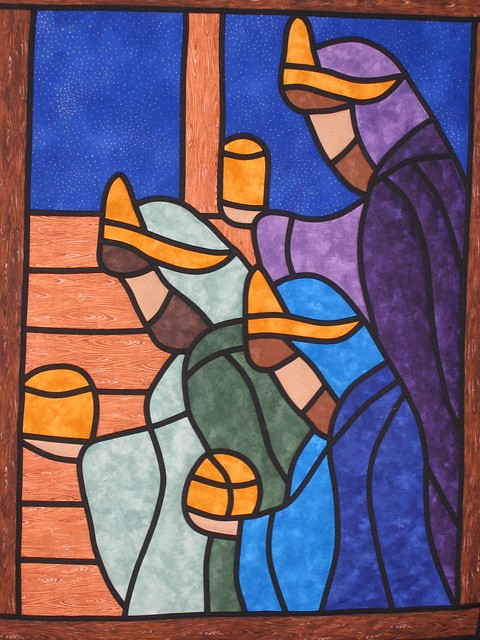
Epiphany remembers the coming of the wise men bringing gifts to Jesus and worshiping him.

The word Epiphany literally means manifestation (to show) or to make known or to reveal. It gets this name because the magi, in bringing gifts and worshiping Jesus, revealed to the world that Jesus was a king.

A parament showing the wise men

I’ve also seen Epiphany loosely translated as “Ah Ha!”

I like that.

Ah Ha!  God is now among us!  Let’s go and worship him!

Are words like that on your mind as you prepare to go to church?  I remember when my kids were little, the thought was:  Come on, we’re going to be late!

What is in your mind when you head for worship?  What words do you say to your children?

Ah Ha!  God is now among us!  Let’s go and worship him!

Would it make a difference if we could teach our children to think that way about going to church? Perhaps instead of saying: “Let’s get ready for church,” we say (with appropriate gusto) “Ah Ha! Jesus is among us. Let’s go and celebrate Jesus!”  Or “Ah Ha!  We get to go worship God!”

Try it next Sunday and report back on how it goes.

--------------


Photo credits:
This image is stored on my Flickr account. It is from my archives—of a church parament I helped create!