Daniel’s prayers: Giving thanks

Let’s say a law gets passed that says you can’t pray. How would you feel about such a statute? Last week a 4th grader answered this question with…

'Not being able to pray would be like not being able to eat.

I never thought of it like that!

Here’s what Daniel did when he heard about the decree…

'Three times a day he got down on his knees and prayed, giving thanks to his God, just as he had done before. Daniel 6:10

Daniel was having a bad day, and yet he chose to be thankful.

Always showing gratitude, regardless of your circumstances, isn’t easy. You know what helps: practice.

The best way to practice is to keep a list.

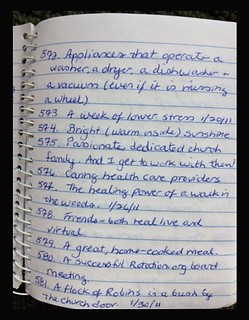
A page from my gratitude listStart a gratitude journal with your family. Talk about what you’d add to your list over the family dinner table.

I’ve been recording thankfuls. Yes I am counting them. I’m going for one thousand, but now that I’ve started, I probably won’t stop.

(Update for Feb. 2017: I’m up to #4,853!)


Here are samples from my gratitude journal:

Skating around the lake541. Sunshine.

549. Riding-in-the-car games.

551. Ice skating on the lake.

557. Chocolate mousse pie.

568. The crunch of boots on snow.

 
a sunrise is seen through the trees576. Kindhearted health care providers.

581. A flock of robins in February!

588. The frosty sparkle of morning light.

 
-------


Photo credits:
Photos are from my archives.

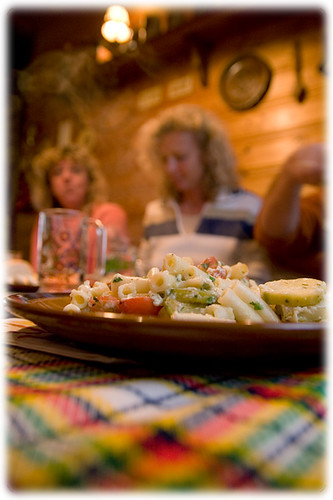
Dinner table conversation?

“atA little while back I’d suggested that a way to talk about faith with your kids was to make family dinner a priority. (Click on “family dinner” to read that post.)

Sometimes getting conversation going at the table can be tough, especially for older kids. Here’s an idea:

Before dinner glance at this brief post from “HuffPost Family Dinner Downloads.”

HuffPost? What’s that?

In the words of the editors…

'Every Friday afternoon, just in time for dinner, our editors highlight one of the most compelling news stories of the week — stories that will spark a lively discussion among the whole family.

This particular HuffPost Family Dinner Download happens to be about eating healthy and about one particular retailer (amazingly enough) agreeing to help with that effort especially for folks with limited incomes. Lots of room for various discussion – there are even questions provided to spark conversation!

But where is “faith” in this discussion?

Glad you asked? To tie your discussion to our current Rotation at at FUMC, bring up the question: What did John the Baptist eat?

The answer: locusts and wild honey! (Matthew 3:4) Yum?

Here are some other questions to discuss:

  • Do you suppose people thought John was strange? Why do you think that?
  • Do you suppose that his strange diet (and his strange clothes) were what drew people to him?
  • Oh, so why else did they want to listen to what John the Baptist had to say? And what was it he was saying/doing?
  • John the Baptist baptized with water. What are some ways water gives and sustains life in the world?
  • Why is water a symbol of what God does for us at baptism?

If your children have been baptized, tell them about it. If they haven’t been baptized, discuss baptisms they’ve seen. Enjoy your family dinner!

-------


Photo credits:
Dinner table photo by vizzzual-dot-com, who licensed this photo on Flickr under a Creative Commons License.

How to find time to talk about faith?

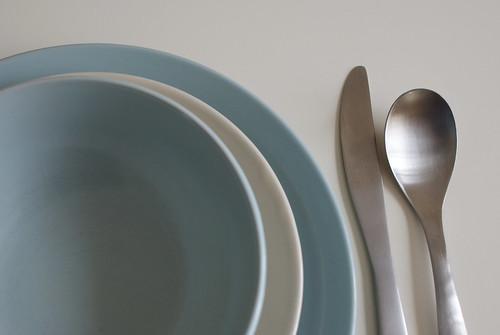
A dinner place setting

Talking about faith at home is important for your family, but how do you find the time to work this into your busy schedule?

Make family dinner a priority

Here’s a book to help achieve this goal: The Family Dinner: Great Ways to Connect with Your Kids, One Meal at a Time by Laurie David.

The cover of the book: The Family Dinner

Ann Arbor District Library has this book.
See if it is available!

Paraphrased from the book, here are some “rules” (they call them “simple steps”) that you can implement:

  • Everyone comes to the table, even if they aren’t hungry.
  • No electronics: No TV. No phones. No texting. (This applies to adults as well!)
  • Everyone stays at the table until dinner is over.
  • Everyone tries one bite of each food.
  • Everyone helps clean up.

Another thing they suggest is to play games at the table! (Either while eating or afterwards.) Check out some suggested “dinner table games.” (Clicking on the underlined words takes you to the most recent post in the category “dinner games.” Scroll down to see other options.)

This all sounds hard! Something may have to give in order for this to happen. But it’s important, isn’t it?

How about making it a New Year’s an any time of year Resolution?

-------


Photo credits:
Table setting by Gisela Francisco on Flickr, who licensed this photo under: Creative Commons Attribution-Noncommercial-Share Alike 2.0 Generic.
Other photo – from my archives. (I took a picture of this book when I had it checked out from the library!)

Wednesday’s Weekly Blessing – a resource for getting started

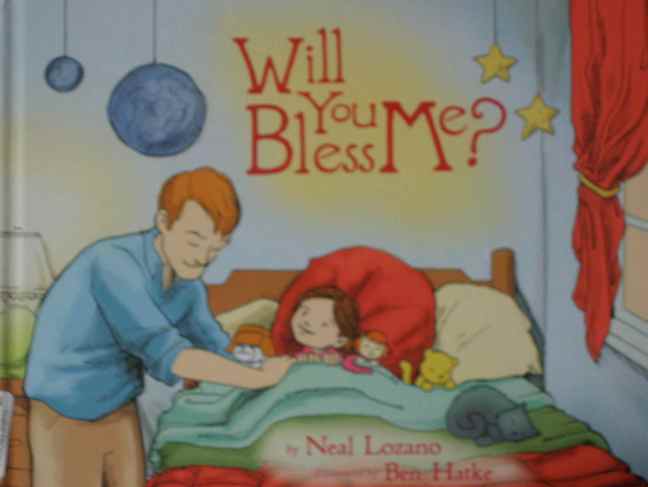
Here is a resource to use, a book to read with your child, to introduce them to the idea of receiving a blessing from you.

Cover of the book "Will You Bless Me?" By Neal Lozano

Why is this such a good book, especially right now, at this time of year?
Because it tells the Christmas story.

It’s not a complete telling and the details aren’t even in order. It’s just the highlights, as told by Mary to her young son, Jesus, who asks his mother to tell him his birth story. I like this part…

Joseph put down his tools… He loved these moments when Mary talked to Jesus about his birth, telling her son all the thoughts and plans God had just for him.

You can do that.

This week, let this be your blessing – your gift – to your child. Tell them about the day they arrived in your household. Tell them how glad you are to be their parent, or how much they are loved, or how they were uniquely created by God, and how God has a specific purpose for them in this life.

Here’s another quote from the book (on a page for parents, grandparents and caregivers). Take this as encouragement to regularly bless your child…

You have all you need to impart to your child the sense of identity and destiny that comes from the heart of God.

Blessings on your acts of blessing your child!


View other blessings here.


Photo credits:
Banner photo (not visible in readers or email) – Pink Sherbert Photography on Flickr, licensed under: Attribution-Noncommercial-Share Alike 2.0 Generic
Other photo – from my archives: my copy of this great little book.

Have you filled a bucket today?

Updated to reflect newly available publications.

Child at the beach filling a bucket
I learned something new at a family program at FUMC in Ann Arbor, MI.

I learned how to be a “bucket filler.”

Even though this interactive presentation on bucket filling was right after the Easter egg hunt, this wasn’t instruction on how to garner the most chocolate eggs in your Easter bucket basket.

No, this event was about something far more important.


Here’s what I took away:

  • Work to keep my bucket full (by filling other people’s buckets)
  • Don’t be a “bucket dipper”
  • And keep my bucket lid close at hand.

So what’s all this talk of buckets?

It’s all based on the concept that everyone carries around an invisible bucket where we store our good thoughts and feelings about ourselves.

When your bucket is full, you feel great.

When your bucket is empty, you feel lousy.

When we are kind and do nice things for someone, we fill their bucket. In the process of doing “bucket-filling, the gratifying side-effect is that our own bucket gets replenished!

This is a great way to teach kids (even young ones) about the importance of being loving and considerate of other people. To keep your own bucket full you need to either receive scoops of love from someone or ladle love upon someone else.

Jesus told us to be a bucket filler: “Love your neighbors as much as you love yourself.” (Luke 10:27). I’m all for full buckets!

But, don’t be a bucket dipper!

What is not good is “bucket dipping.” When someone acts mean, in the things they do or say (or even simply ignores us!) they dip into our bucket, hijacking some of our happiness.

For kids, this describes bullies, but it also can describe the daily goings-on in our households. How about: “My bucket is being dipped when you don’t pick up your toys as I’d asked.” Or, “I see that both of your buckets are being dipped when you and your sister are arguing.”

What’s with the bucket lid?

This event turned out to be so much more than just another way of looking at the Golden Rule. The presenter from Bucket Fillers, Inc. empowered us to deal with bucket dippers by putting a lid on our bucket! What a refreshing way to visualize protecting your feelings—for kids of all ages.

As I have thought about this bucket concept, it occurred to me that God wants to fill to overflowing, all of our buckets!

Open quote markFrom the fullness of his grace we have all received one blessing after another. John 1:16

God needs us to do the work of filling each other’s buckets. I have just one question…

A bucket full of blessings

-----

Some Bucket-filling Resources:

The book Have You Filled a Bucket Today?This is a great book to introduce bucket filling to your kids; for all ages (even adults!)
 

The book: Fill a bucketThis one is great for ages birth to 5.


Book - Growing Up with a Bucket Full of HappinessA chapter book for ages 9 and up.


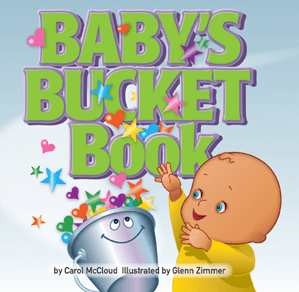
Book - Baby's Bucket BookBoard-book for ages birth to age 2.

Baby’s have buckets too!


To purchase the above books and other products visit Bucket Fillers, Inc.


Photo credits:
Beach photo offered by RJ Bejil, who licensed this photo under a Creative Commons License.

Graphic: “Have You Filled a Bucket Today?” – used with permission from Bucket Fillers, Inc.
Book covers – Not affiliate links (I get nothing for pointing you to the organization Bucket Fillers, Inc. Just trying to point you towards resources.) but these covers do link to the publishers’ web site. This, in my mind, keeps this in the category of fair use for educational purposes.

Talking about disaster

Helpers work at the Haiti earthquake

With the earthquake in Haiti on our minds, I refer you to this excellent article by Thomas Haller and Chick Moorman on talking to your kids about this tragedy (click on the words below).

Explaining World Tragedy to Children

I love how the authors of this excellent article (as well as numerous books about parenting) say to…

…encourage your children to look for the helpers. Helpers always come.

If you donate to relief efforts include your children in the check writing or key-board-clicking. Talk about what helpers you’ve had in your life. (Has anyone ever brought you a casserole?)

Ask them to be on the look-out for helpers in their lives. Point out when someone lets you cut in line with your car (or when you allow someone else in!) Teach them the language: “I’m being a helper” or “There’s a helper!”

As Haller and Moorman say,

Let them see and be love in action.

Where have you seen love in action?

-------


Photo credits:
Helpers at the Jan. 2010 earthquake in Haiti, originally uploaded by the United Nations Development Programme, who licensed this photo on Flickr under a Creative Commons License.

Are you seeing ads? They are not from me! They are placed by WordPress, who otherwise offers a free platform from which to share lots of good-ness. If you see an inappropriate ad, please report it to support@wordpress.com. Include the URL, the date/time the ad appeared, and a screenshot of the ad.