Christmas Blessings!

{A Christmas blessing for you.}

This Christmas, may you catch a glimpse of this truth…

A creche scene with the words 'Love Came Down'

Love came among us on Christmas.

Yes, to us all!
The heart-sick,
the weary,
the lost,
the down-troddened.

To give us hope.
To show us how much God cares.

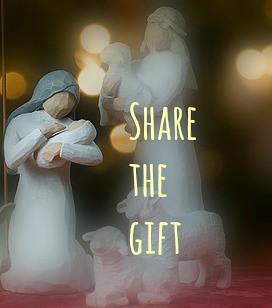
Share the gift

May you bring this gift to others.
May you be an image-bearer of Christ,
an agent of change,
a light for the world!


May you have a blessed Christmas!


–Love, Carol

Nativity scene with Christmas tree background


Photo credits:
Nativity by Jeff Weese, who licensed this photo on Flickr under a Creative Commons License. Altered images here and here, by Carol Hulbert, at Flickr.

Are you seeing ads? They are not from me! They are placed by WordPress, who otherwise offers a free platform from which to share lots of good-ness. If you see an inappropriate ad, please report it to support@wordpress.com. Include the URL, the date/time the ad appeared, and a screenshot of the ad.

How goes your journey?

This entry was originally posted when our kids were talking about the wise men, however it applies to all year ’round! What are you doing to further your faith growth?
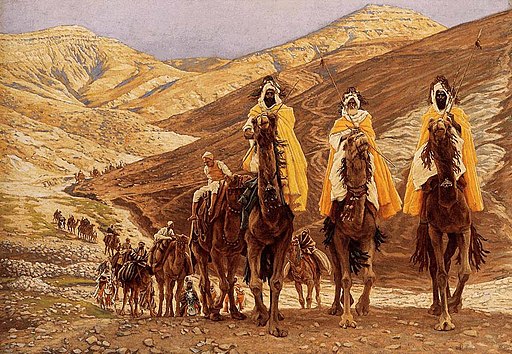
Painting by James Tissot, in the Public domain, via Wikimedia Commons

I find it amazing that the wise men made such a long, arduous journey to worship Jesus. Previously I had pondered questions that the wise men may have asked as they prepared for their trip. Such as…

  • Where would the star lead them?
  • What would they find?
  • How would they be received?
  • And, are we there yet?

Wait a minute! This sounds like an adventure someone else (whom we’ve recently studied about) made to an unknown destination. In fact, it may well be that they both came from the same area!

Both were Gentiles (not Jewish) at the time God summoned them. Neither knew exactly where they were going when they left their homeland. Both obeyed God and were instructed by the stars. (Abraham: Genesis 15:5, the magi: Matthew 2:2). (Did you figure out that I was thinking of Abraham & Sarah?)

Both parties chose to venture into the unfamiliar.

Speaking of an uncharted odyssey…

How goes your family faith journey?

Does it feel like you don’t know where your faith walk will lead you, or what you’ll find along the way, or even if you are on the right path? Join the wise men! Here are some hints about how to stay the course on your family faith journey.

a starParticipate in rituals.
Celebrating family rituals is a great way to grow in faith together. Rituals and traditions are repeated activities that help family members develop a sense of belonging. Make time for rituals that connect us to God: Saying table grace, bedtime prayers, daily Bible reading… Add a new ritual! What occasions can you make special (besides the usual holidays and birthdays)? It’s not too late to start an Advent ritual.
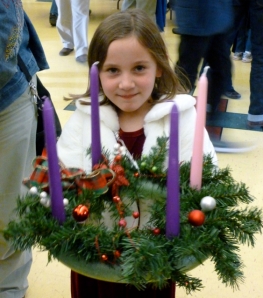
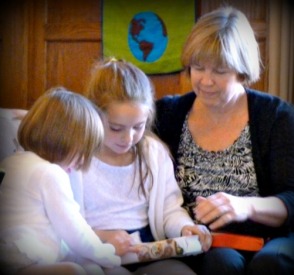
a child holds a newly created Advent wreathMom with two girls look at a Bible

a star Worship together.
If kids don’t experience worship as a child, what will cause them to want to participate as an adult?
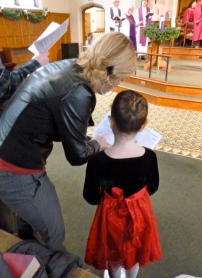
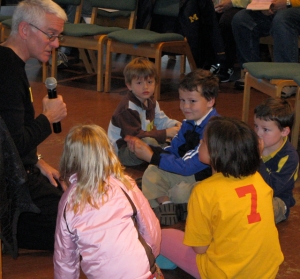
A family worships togetherChildren have a time with the pastor at church

a starServe others.
The family that serves together, stays together!
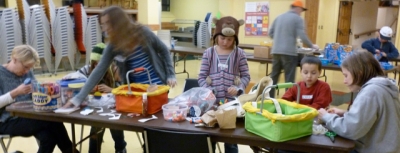
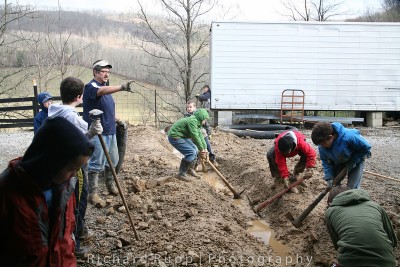
Families participate in a service project

10 kids ages 10 and under dug a 30 foot drainage ditch

It’s not too late to consider joining us on our spring Appalachia Mission trip.

a star Watch for a shining “star” (or two or three).
Notice signs that lead us to think of Jesus.

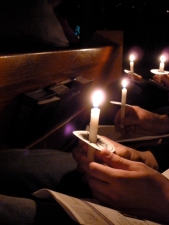
The sun sets over the lakeChristmas eve service

a starCultivate your personal faith.
Don’t you want your kids to “do as you do?” Take time to build your own faith. Set aside a regular time to commune with God in prayer, read the Bible, or join a class at church.

a blue line

As your family traverses its way along your faith journey, know that God is our God and God is always with us!


Photo credits:
Painting of traveling magi by James Tissot, in the public domain, via Wikimedia Commons.
Star from the public domain via WPClipart.com.
Other photos from my archives or from from the families of FUMC. Appalachia photo copyright, Richard Rupp Photography; used with permission.

Who was doing the seeking?

In our current Advent Rotation, we are learning about the wise men, who upon discovering an unusual new star, traversed from afar, looking for the new king. (In those days an unfamiliar star = a royal event; all great kings had a star associated with their birth.)

Arriving in Jerusalem these magi created quite a commotion with their inquiry…

A photo of the Milky Way Galaxy with the words from Matthew 2:2

These wise men were on a determined hunt for this new king. We don’t know how far they had traveled, or what sort of difficulties they came up against; they persevered.

But who was seeking whom?

Who got these magi started on their quest?
Who put the star up in the sky?
Who re-hung the star after their stop in Jerusalem? (Matthew 2:9)
Who guided them to find Jesus?

This seeking seems to be going both ways! Seeking Jesus is a beneficial practice, but what about considering that Christ also seeks us?

How would it benefit us to notice signs of God leading us to Jesus?

A friend offers assistance at the right moment.

A child asks a pointed question.

A word heard, sparks thoughts.

If we’re not looking, will we notice?

Talk with your family about God seeking us. Here are some questions to guide your discussion. Perhaps ask a few questions during a car ride. For an easy to print out version, click here.

Star clipartRead: Matthew 2:1-2.
Ask: What questions do you suppose the wise men asked before they started their journey? (How far will we have to travel? Will the star continue to guide us?)
Why do you suppose the magi left everything to go looking for Jesus?
I wonder how the star had that much pull in their lives?
Can you imagine God in his wonderous power, hanging a bright star as a sign to the wise men?
What was God hoping these wise men would do?
What has been your “star” leading you to Jesus?

Star clipartRead: Matthew 2:1-8
Ask: When Herod heard about the magi asking about “one born king of the Jews,” he called together the chief priests and religious teachers. What did he ask them?
What was their response?
How do you suppose Herod really felt about this “new king?”
How come these religious leaders didn’t act interested in Jesus?

Star clipartRead: Matthew 2:1-12
Ask: When the wise men saw Jesus, what did they do?
Do we worship Jesus like the magi did?
What is different?
We could say that the wise men were “wise” because they went looking for Jesus. How would we describe a not-so-wise person? (Too busy to look? Not willing to try hard enough?)
How could you help someone become “wise?”
Contemplate how the magi packed for their trip. How does a wise person “pack” for Christmas? (Plenty of patience?)

God loves you. He seeks your love in return!

Photo credits:
Our Milky Way Galaxy original photo by C. Malin of ESO, made available for use under a Creative Commons 3.0 License. Altered image to add Bible passage, by Carol Hulbert at Flickr.
A slightly altered (coloration, size) clipart star, from the Public Domain via wpclipart.com.

Purposeful Gratitude

In reading the story of Abraham and Sarah, have you noticed that Abraham has a habit?

He stacks stones.

A very balanced pile of rocks

No, Abraham wasn’t piling rocks in an artful manner such as the photo above. He built altars. He deliberately heaped soil and rock, forming a reminder. A physical stalwart to remind him of an encounter with God. He would use these altars in his worship to God and to remind himself of God’s promises of blessing.

In the season of Thanksgiving, how about we be as deliberate, and make our gratitude be purposeful. The key is to make this your new normal. Here are some ways to do this with your family:

  • Why not pile some rocks. Go out for a walk to collect stones. Once back at home, in a family gathering (perhaps at the dinner table), read about Abram’s altar building in Genesis 12:6-8 or Genesis 13:3-4 or Genesis 13:18. Make a pile of your rocks naming each one as a thanksgiving to God.
  • Take the next step and write thanksgivings on your rocks with a permanent marker, or use a glue and water mix (Modge Podge) to apply cut out pictures to your rocks.
  • Allow your rock pile to be re-built on a daily basis!
  • A "shrine" of things that invoke the memory of God's goodness

  • The Life Application Bible tells us that Abram built altars to “remember that God was at the center of his life.” Build a different sort of “altar.” Fill a space in your home with reminders of thankfuls. Allow touching and rearranging and additions and subtractions. (Photo on right is at the Nelson home around Easter time.)
  • With older children discuss ways people often build “monuments” to themselves or to their stuff. Why do you suppose we do this? How can we break into a new focus of being grateful?
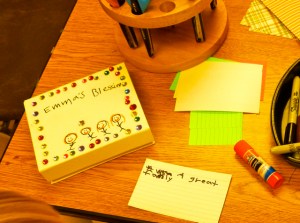
  • A blessing box - a place to store your blessings!

  • Fill up your family blessing box!
    If your child didn’t get to make one in our Art Workshop for the story of Abraham & Sarah, you can view the lesson here and download the instructions here. Decorate any old box!

What are other ways your family makes gratitude purposeful?


Photo credits:
Balancing rocks by Viewminder, who licensed this photo on Flickr under a Creative Commons License. “Shrine” photo from the Nelson family. Used by permission. Blessing box photo from my archives.

Are you seeing ads? They are not from me! They are placed by WordPress, who otherwise offers a free platform from which to share lots of good-ness. If you see an inappropriate ad, please report it to support@wordpress.com. Include the URL, the date/time the ad appeared, and a screenshot of the ad.

Become the blessing

Gather the family together and tell this story. Be prepared to stop for questions.

Once upon a time there was a man named Abram who heard from God. “I want you and your wife to be a part of something really big. Pack up and move far from here, and raise up a great big family; generation after generation! I promise to bless you richly, to give you much goodness! And in turn, you will bless the world!” (Genesis 12:2.)

Do you suppose that Abram often thought about those numerous descendants — the ones God had promised to him? I can just imagine him chuckling to himself as he watched the sheep, “When those grandchildren come, I’ll tell them all about the altar I built at the great oak tree in Moreh” (Genesis 12:6-7). “I’ll tell them how I didn’t see how, with all of those Canaanites around, the land would ever be ours! Ha!”

Have the adults in your family ever thought about their grandchildren-yet-to-be-born?
What about the kids; have you ever thought about your grandchildren?

I am sure there were times when Abraham’s doubts about God’s plan spilled over in frustration. I can imagine him grumbling to his childless self as he tended to the goats, “The Lord God can bless me all to pieces, but it won’t do any good. Copious kin! I don’t even have a son! I’m too old.” (Genesis 15:1-5).

Then there probably were times Abraham (God had given him that new name as a sign to remember God’s promises) wondered about “blessing the world.” As he leaned back his head to adequately view the marveling display of glimmering stars overhead, he wondered to himself, “What did God mean by that? I will be blessed… so that I can be a blessing? How can I be a blessing?”

Have you ever wondered how you can be a blessing?

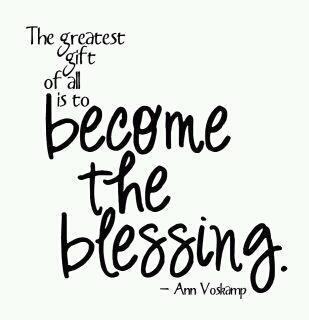
"The greatest gift of all is to become the blessing." A quote by Ann Voskamp.

We share God’s promises; they belong to us.

What are we doing to bless others?
Our family? Our friends? Our neighbors? The homeless man on the street? The store clerk? Our grandchildren (the one’s way off in the future)?

Abraham and Sarah teach us to respond faithfully to God’s call, even when it doesn’t make sense; even when our trust wavers. The payoff is great. (God promises it will be full!) God can’t wait to bless us! And in turn, God wants us to enrich the lives of others; it’s part of God’s plan to bless the whole world!

Photo credits:
Click here for info on banner photo (not visible in readers or email).
The quote above is from Ann Voskamp’s book
One Thousand Gifts. The word art was created by Deb Chitwood.


Are you seeing ads? They are not from me! They are placed by WordPress, who otherwise offers a free platform from which to share lots of good-ness. If you see an inappropriate ad, please report it to support@wordpress.com. Include the URL, the date/time the ad appeared, and a screenshot of the ad.

Take time to travel through the story

A public domain image: Abram Called to be a Blessing
(In Canaan) the Lord appeared to Abram and promised:
“I will give this land to your family forever.”
Abram then built an altar there for the Lord.
(Genesis 12:7)

The story of Abraham and Sarah winds it’s way through several chapters in Genesis, so here is a reading plan that breaks it down into manageable chunks. Print out this plan and over the course of several days (weeks!), have your family read the story together. Included are activities and questions to go with each reading!

a girl readingIf you’d like to print out this reading plan/discussion guide, click here.

Read in Genesis Talk about or do…
12:1 If God called you to suddenly move to a not-named spot, would it be an adventure, or something to avoid? Would you go? What would you pack?
12:1-5 Abram faithfully goes! He doesn’t know where he is headed! (The Bible can look in hindsight and tell us that he went to a land called Canaan.) Someone’s actions reveal their character. What type of person is Abram? What would you like your actions to reveal about you?
12:1,4 Have each person take a turn at being led while blindfolded. Talk about how this felt. (Trust was required!) How is our walk with God sort of like a blind faith walk?
12:4-7 Hey, wait a minute! But God said he’d give Abram this land and yet the Canaanites seem to have gotten there first. Yet what does Abram do? (Hint: 12:7 – he hears a repeated promise of land & builds an altar to worship God.) Name a time when your expectations didn’t meet what happened. How did you react?
11:31, 12:1 See if you can find on a map, all the places where Abram went. (Try this one.) Can you figure out how far Abram and Sarai traveled? What is the longest trip you’ve ever taken?
12:1-3 What does it mean to be blessed? (Ans: that you’ve received something good.) What does it mean to be a blessing? As Thanksgiving approaches, collect a list of your blessings. Everyone write or draw a blessing. Place them in your box you made in the Art Workshop! (or save them up if you haven’t visited Art yet.)
12:1-7 God has both made commands and promises to Abram. What has God asked Abram to do? What are his promises? Why does the promise to make Abram into a great nation (which requires lots of offspring) seem like a farfetched dream? (Hint: 11:30) What outrageous promises have you received?
13:14b-18 God is reminding Abram of the promises he has made. Abram used altars he built out of rocks to remind himself of encounters with God. Go on a walk and gather a few stones. Take them home & build a table-sized “altar.” Periodically restack the stones. Remember God is always with you.
15:1-7 Abram doesn’t bottle up his feelings! He tells God about his doubts. When have you doubted God? (It is okay to share your doubts with God!) What reminders of his promises has God given you?
15:5 Plan a star gazing night. What do the number of stars represent for you?
15:18a, 17:1-4 What is a covenant? (Look up the definition in your Bible dictionary.) A covenant is like a special agreement including a promise. What examples of covenants (special promises) can you think of? Write a family covenant that everyone can participate in. Bonus Q: What does the little “a” mean, after the 18?
17:1-9 How old is Abram? (99!) Look back at 12:4 to see how old Abram was when our story started. How many years has Abram waited for God’s promises? Why do you suppose God waited so long to fulfill the promise of a son? What can we discover in waiting for God’s promises?
17:3-5, 15 Caregivers: provide the story of how your child’s name was chosen. If you could change your name, what would you change it to? What if your name change signified a change in relationship with God?
17:7-9 What does God mean when he says that this is an “everlasting covenant?” What does this mean for us? Hint: check out 17:7 (it’s our key Bible verse). Develop a family cheer using the words: “God is our God!”
18:1-15 Who are these three visitors? What do you make of the way Abraham treats them? How do you treat visitors?
17:15-17, 18:10-15 Why do Abraham and Sarah laugh? Tell about a time you laughed at an inopportune time. Speculate about what makes God laugh.
21:1-3 What does this story teach you about God? What long-awaited event has brought you the most joy?
Bonus questions: How are Jacob & Esau related to Abraham? How about Joseph? Draw the family tree.


Photo credits: Click here for info on banner photo (not visible in readers or email).
Abram worships God in thanks for God’s promises, by Providence Lithograph Company, circa 1906; in the Public Domain via Wikimedia Commons.

All Saints Day? Tell me more.

This weekend families join together in worship for a special service where we celebrate “All Saints Day.” (Which occurred on November 1st.)

What do you picture when you hear the word “saint?”
Someone who models perfection?
Who does/did no wrong?
Who is exceptionally holy and wears a halo??

I like the definition of All Saints Day, given by Gertrud Mueller Nelson in her book To Dance With God: Family Ritual and Community Celebration

All Saints Day is the celebration of those who have contributed successfully to the creation of the kingdom.

To be a saint doesn’t imply we have to be perfect!
It just means we wear our faith on our sleeve!

an old bell on a chapel In the worship service this weekend there will be a time where we remember saints who have died in the past year. As their names are read a bell is tolled.

This special time of the service is to remember — to thank God — for these saints who have shown others the Christian walk and faith.

They wore their faith on their sleeves!

 
Time Out. Talk about…A speech bubble

Prepare your children for this portion of the service by talking about remembering. (Don’t worry if you don’t have a chance to prepare ahead of time. Talking about it after the service works too!)

  • Ask your kids what they remember about your last vacation, or a special birthday, or a visit with a friend or a relative. Invoke memories of good times! Why is it good to remember these occasions?
  • How is the celebration of Communion a time to remember?
  • Share with your kids, remembering whose example helped you on your faith journey. Didn’t grow up with these sorts of mentors? Talk about who is currently helping you build your faith. (We are allowed to stretch the definition of a saint to include those who are living!)
  • Use this as an overture to talking about who are the current mentors in your child’s spiritual journey. Whom would they like to have as their advisers? (Research shows that kids are helped to succeed in life when they have multiple non-family adults in their “camp.”)
Are you wearing your faith on your sleeve?


Photo credits:
A church bell in a chapel on the Island of Corfu, Greece, from my archives.

Are you seeing ads? They are not from me! They are placed by WordPress, who otherwise offers a free platform from which to share lots of good-ness. If you see an inappropriate ad, please report it to support@wordpress.com. Include the URL, the date/time the ad appeared, and a screenshot of the ad.

Ringy-ding-ding. God is calling.

It’s not just the phone that can call us away from something.

a phone is ringing
a phone is ringing

 
It’s the alarm clock,
the hungry family,
the laundry piles,
the boss,
the egg timer,
the ping of “you’ve got mail”...

All things that call us; demanding we turn our attention their way.

What calls have you heard lately?
Anybody heard God calling?

Abram did.

Of course things were a lot quieter in Abram’s day. (The bleating of a few sheep perhaps?) As you start a new Rotation on Abraham, you’ll be learning about how Abraham (whose name started off as Abram) heard God’s call and how he responded to that call. Here it is from the Bible…


Open quote markAbram, get up and go! Leave your country. Leave your relatives and your father’s home, and travel to the land I will show you. Don’t worry — I will guide you there. I have plans to make a great people from your descendants. And I am going to put a special blessing on you and cause your reputation to grow so that you will become a blessing and example to others.   Genesis 12:1-2


Talk about “calls” at the family dinner table (or wherever your family is gathered together). Start off with a game. Make it like the “I’m packing a suitcase” game, except in this case the first person tells something that called them away, for example, the alarm clock called them away from a dream. The next person repeats the first call and adds their own: the bell that called you away from recess. (They don’t have to be actual events that happened; the President called on the phone and asked you to come to Washington?) And so on, until someone can’t remember the list of calls!

Play again if you desire. Eventually turn towards a discussion about how many different types of calls there are on our daily lives. Ask these questions:

  • Do you suppose that there are so many calls on our lives that we can start to respond without thinking?
  • What can help us to stop and remember to prioritize which calls we’ll respond to?
  • What about God, does he call us?
  • Name some ways that God has called you in the past.
  • In what ways might God use to reach us? (through the words of a friend, a Bible passage, a song…)
  • What might keep us from hearing God’s call?
  • What can we do to help us listen for God’s call?

Ringy, ding, ding.
Check the caller-ID. It might be God calling.

--------------

Photo credits…
Phone call by Sean MacEntee, is licensed under Creative Commons (CC BY 2.0).