How to read a long story – a little at a time

Gleaning by Arthur Hughes Pose this question at the family dinner table. (Or wherever your family is gathered together.) True or false: Dumpster-diving was practiced during Bible times.

Want to find out? Read our scripture together as a family. Since it’s a long story, use the following plan to read and talk about our story in stages, over the course of several days. Read a passage and then discuss the question(s) or do the activities. (Scroll down for suggestions on reviewing this story with preschoolers.)


Read in Ruth Readers notes Talk about or do…
Chp 1, verses 1-2 written as 1:1-2 Elimelek (or spelled, Elimeleck) is
pronounced: ee-LIM-eh-lek. Mahlon => MAH-luhn. Ephrathite => EF-ruh-tight.
What is a famine? Where have we heard of Bethlehem before? Find Bethlehem and Moab on a map (look here). How long do you suppose it took to travel there?
1:1-5 Orpah => OR-puh.
The Moabites and the Israelites were enemies! In fact the Israelites had strict laws forbidding these foreigners from participating in the Israelite community (Deuteronomy 23:3).
What is an “unusual” place you’d like to visit? Why does Moab seem like a strange choice as a place for an Israelite to go?

Naomi has bad news! What do you suppose life was like for women back in Bible times?

1:6-18 In a patriarchal society, where women did not have access to jobs, widows were completely dependent upon men – either a grown son, or another husband (if they were able to remarry).
Choices, choices! Which choice would you make: Go with Naomi or go back to “safety?” What could have made Ruth decide to follow Naomi’s God? Why do you suppose Ruth was so devoted to Naomi? Where do you suppose this loyalty come from? Who is someone to whom you are loyal?
1:16-18 Verse 16b, c is our key Bible verse for this Rotation. The “b, c” means the second and third portions of verse 16. Why does this seem like such an extreme promise for Ruth to make? What promises have you made lately? Any this radical?
1:19-21 Mara is pronounced: MAY-ruh.
The meaning of names was important in Bible times. Naomi meant “pleasant;” Mara meant “bitter.”
How is Naomi feeling? She is hurting! She is moaning about her situation! She is doing what is called “lamenting!” Read together the classic Psalm of lament: Psalm 13:1-2. When have you lamented? Do you suppose that a little bit of lamenting is okay every now and then?
1:22-2:13 Elimelek => ee-LIM-eh-lek. Boaz => BO-az.
For the laws which set up gleaning, read: Leviticus 19:10; 23:22
What does “gleaning” mean? (It was like welfare for the poor.) What sorts of programs do we have today to help people get food? Make a plan to attend FiSH Fri Service Night.
2:14-23 Israelite law required all farmers to leave dropped grain (or other crops) in the fields for the disadvantaged to glean, however it was the landowner who determined the generosity of the gleanings! In verse 20, what word is used to describe Boaz’s relationship to Naomi’s family? A close relative? Nearest kin? Guardian-redeemer? Who do you have in your family who takes care of you?
Is Naomi still lamenting? What has caused her attitude to change? Count all the ways Boaz showed kindness to Ruth.
3:1-18 According to Israelite laws, the nearest blood relative (a “kinsman redeemer”) was to marry a widow to continue the family line. Naomi is setting up a plan to implement this process. Which verses tell you that Boaz is an honorable man? How are things looking for Ruth and Naomi? Why do these demonstrations of loyalty seem counter to the Israelite-Moabite prejudice?
4:1-10 Is this a coincidence that Ruth finds her way to Boaz’s fields, or is it God’s grand plan to bless the life of Ruth and Naomi through Boaz? (Methodists say that God works inside of people, to transform them, and others around them.) What did you think of the handing over of the sandal? In what way do you seal promises?
Remember Ruth’s lavish pledge to Naomi? (1:16b, c) What do you suppose Ruth thinks of her promise now that Boaz is going to take care of her? Do you suppose that Ruth gave thanks to God? From this story, what does God teach us about caring for others?
4:13-22 You may wish to take care in how you read verse 13. What is the significance of the family tree? (King David was their descendant!) David had a great great great… (many greats)… grandson whom we talk about a lot, and who was born in Bethlehem just like Obed; who was it? (Jesus!) What would have happened with Jesus if Ruth hadn’t gone with Naomi?

a blue line

Reading and talking about the story for younger children:

Here are several versions of the story:

The cover of The Little One's Bible The Little One’s Bible

This Bible storybook has appropriate questions on each page.
 
The cover of The Beginner's Bible The Beginner’s Bible

Show a map and point out Judah. Identify Moab as the place where Ruth and Naomi were.
At the end of this story, add in the part about Obed being the grandfather of King David and about David being the ancestor of Jesus. Draw your family tree.
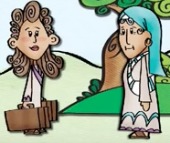
 
From a Jelly Telly video on Ruth A video by Jelly Telly (What’s in the Bible?): Ruth

 
What’s in the Bible: popsicle stick puppets – Ruth (If reading this in an email, you can watch this video on YouTube.)

a blue line


Photo credits:
Gleaning, a painting by Arthur Hughes is in the Public domain, via Wikimedia Commons.

Are you seeing ads? They are not from me! They are placed by WordPress, who otherwise offers a free platform from which to share lots of good-ness. If you see an inappropriate ad, please report it to support@wordpress.com. Include the URL, the date/time the ad appeared, and a screenshot of the ad.

Revealing the hidden truth: Who is your neighbor?

boy eating at tableWho likes to play games? How about playing a game around the family dinner table? After all, dinner table games can lead everyone into dialogue. And what could be better than a family talking!

What game shall we play? How about a storytelling game! Chose someone to start the story. They can start to tell a tale about anything! After a couple of sentences, they choose someone else, who then continues the story where it left off. Of course it’s more fun if you move along quickly!

 
When your story finishes up. Ask your family these pointing-to-another-story questions:

  • A parable is a type of story. Who is known for telling lots of parables? [Jesus!]
  • Can you name some of Jesus’ parables? [There are over 50! Dig through a Bible to find some.]
  • What is it about a parable that makes it unique? [Parables are stories with a hidden meaning that are meant to teach us something.]
  • What do you suppose is the hidden meaning in the Parable of the Good Samaritan? (Need to review the story?)
  • The hidden meaning in this story was that our “neighbor” can be the person we least-expect! What is this parable teaching us today? [It asks us to look at how we view others. Isn’t everyone our neighbor?]
  • Pastor Doug has been talking about “Disruptive Christianity.” What do you suppose we could do that would help out a “neighbor?” How would doing that be “disruptive?”

a blue line


Photo credits:
Child at the table by Jenna P, who licensed this photo on Flickr under a Creative Commons License.

Are you seeing ads? They are not from me! They are placed by WordPress, who otherwise offers a free platform from which to share lots of good-ness. If you see an inappropriate ad, please report it to support@wordpress.com. Include the URL, the date/time the ad appeared, and a screenshot of the ad.

What is a Good Samaritan?

Oops! Tire Pop!How would you define a “Good Samaritan?” Is it someone who stops to help someone who needs roadside assistance?
Not surprisingly, that is the modern-day meaning of a Good Samaritan, but that is not what Jesus was teaching us to do!

 
This coming Sunday the downtown Cool Disciples will start a new Rotation on the Parable of the Good Samaritan. I’m hoping that we’ll see the hidden meaning in this parable!

Here are some recommended steps you can take over the course of the next few days. Do these things at the family dinner table. Or wherever your family is gathered together.

a blue line

Your assignment: (Think of this as… Traveling down the path to deepening your family’s faith. And a way to get more out of Sunday’s Cool.)
  • Read our story in Luke 10:25-37.
  • The next time you gather, read the story in a different Bible version. (How about The Message?)
  • When you gather again, try telling the story from memory. Check a Bible to see how you did.
  • A fun thing to do after multiple tellings of the story is to tell the story incorrectly! “Once a man was traveling from Ann Arbor to Lansing.” Allow everyone to add a line to the story. See if anyone catches the purposeful mistakes.
  • Watch this animated video of the story.

Watch it a second time and tell the story as the video runs. (If reading this in an email, you can watch this video on YouTube.)

a blue line

Think of how much deeper the classroom discussion could be if everyone arrives with a general knowledge of the story!

See you in class! (Hope you’ve put church on your calendar.)


Photo credits:
Flat tire by OakleyOriginals, who licensed this photo on Flickr under a Creative Commons License.

Are you seeing ads? They are not from me! They are placed by WordPress, who otherwise offers a free platform from which to share lots of good-ness. If you see an inappropriate ad, please report it to support@wordpress.com. Include the URL, the date/time the ad appeared, and a screenshot of the ad.

What do respectful actions look like? Does God care?

Another wonderful adventure in the Wonder-Blimp!

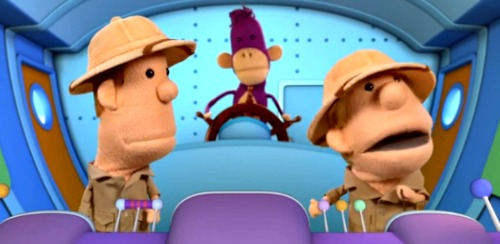
Clive & Ian (and Monkey) in the Wonder-Blimp

Our question for today was:

How do we show God respect through our actions?

Use the discussion questions below to encourage a dialog with the Bible! Start the conversation in the car on the way home from church, or around the family dinner table, or wherever your family is gathered together. Ask these questions even if you missed the video showing!

Have some family time discussion…

  • Here’s a quiz. You see the following actions. What would you say is true about the person who is doing these actions?
    • Scowls at everyone.
    • Greets everyone with a smile.
    • Drops litter on the ground.
    • Holds the door for the person behind them.
  • Why are our actions important to God?
  • In our daily life, how we can show respect to the people around us? (Hint: Read the “Golden Rule” in Matthew 7:12.)
  • What would that look like at the dinner table at home? At recess on the playground? In the classroom? In the car?
  • How can we remember to act that way? Can we come up with a family code word that will mean: “change your behavior to be more loving”? How about “Matthew 7:12” or just “7-12?”
  • We often mess up. (We are only human!) What can we do when we flub up? (Ask for forgiveness and for help in being more loving.)

-------


Photo credits:
Photos from the producer of our video Clive & Ian’s Wonder-Blimp of Knowledge, under a fair use category.

Are you seeing ads? They are not from me! They are placed by WordPress, who otherwise offers a free platform from which to share lots of good-ness. If you see an inappropriate ad, please report it to support@wordpress.com. Include the URL, the date/time the ad appeared, and a screenshot of the ad.

Do helpful words, matter to God?

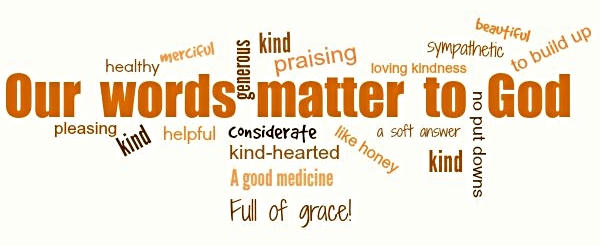
word cloud

You’ve heard the old rhyme about sticks and stones, and words not wounding?

So not true.

Our words do matter; to others, and to God!

God really cares about the words that we use and how we use them.

How do we know?

Join us for some discussion! Start the conversation in the car on the way home from church, or around the family dinner table, or wherever your family is gathered together. Spread the questions out over several sessions. Ask these questions even if you missed the video showing!

Have some family time discussion…

  • Do you find it easy or hard, to use kind words with someone you know well? What about with someone you dislike? With someone who is giving you a hard time?
  • Have you ever heard the expression: “Kill them with kindness” — what do you suppose it means?
  • Do you feel that there is a difference between acting kindly and true kindness that comes from the heart? How would the two look different?
  • The Bible has lots to say about how we should use our words. Take turns looking up a verse and talking about what it means to you: Luke 6:45, Proverbs 15:1, Proverbs 15:4, Proverbs 16:24, Psalm 19:14, and Ephesians 4:29.
  • Several of these verses were from the book of Proverbs. Proverbs is a book full of short instructions on living wisely. Watch this short video about Proverbs. (If reading this in an email, you can watch this video on YouTube.)
  • The Bible tells us that our words are important to God. Why do you suppose God cares about what we say?
    Jesus taught that “A person’s mouth says everything that is in their heart” (Luke 6:45). God listens to what we say; it tells him what is in our innermost selves. God loves us. So of course God would care about us. And, since God loves everyone, he’d care about the effect our words would have on other people.
  • In class on Sunday we played a version of Chutes and Ladders. If your child didn’t bring home a game board, get two here. (This will download a Word doc to your downloads folder.) Use some coins as game pieces and toss a dice to play a quick round.
  • Bonus question: Would you attend a dance party on the Wonder-Blimp?
  • -------

    This summer, we hope you’ll join us on our movie adventure and also, continue the learning at home.


    Photo credits:
    A created word cloud by moi. Shared at flickr under a Creative Commons license.

    Are you seeing ads? They are not from me! They are placed by WordPress, who otherwise offers a free platform from which to share lots of good-ness. If you see an inappropriate ad, please report it to support@wordpress.com. Include the URL, the date/time the ad appeared, and a screenshot of the ad.

    My authentic self is flawed. How can God love me?

    I have often wondered how God could possible love me. When it comes to handling my life – I flub up. Often. I’m flawed!

    Yet God still loves me.

    One of the greatest things we can teach each other is that God loves us no matter what we do. I need constant reminders. And you?

    A love note from God

    In our adventures with Clive and Ian’s Wonder-Blimp, today’s query was:

    Does God Love Me When I Do Bad Things?

    Use the questions below to continue the discussion. Start the conversation in the car on the way home from church, or around the family dinner table, or wherever your family is gathered together. Ask these questions even if you missed today’s video showing!

    Have some family time discussion…

    • Have everyone share one thing that they noticed that the person on their left, did “right” today. (Allow all replies!)
    • Do we always do the right thing – all the time? What happens when we do something “bad”? (There are usually consequences!)
    • Do you suppose that there is anything that you can do that will make God love you less?
    • How can I be assured that God loves me?
    • God can be pretty hard to understand! We can only say, “Thank You God” for what Jesus did for us – dying for our sins. Jesus’ death and resurrection has brought hope to everyone!
    • Read in the Bible, the story of Peter disowning Jesus (Luke 22:54-62). Did Jesus stop loving Peter? (No!)
    • Sometimes we are like Peter. When we do wrong things, it’s like we turn our backs on Jesus. But through Jesus we have been forgiven and brought into right relationship with God.
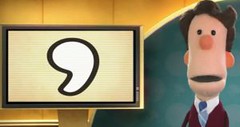
    • Buck Denver starts to tell us about commasBonus Question: Why do you suppose we need speed bumps (AKA: commas) in our sentences? What if every time we saw a comma, we were reminded that God loves us?

    -------

    This summer, we hope you’ll join us on our movie adventure and also, continue the learning at home.


    Photo credits:
    Photos from the producer of our video Clive & Ian’s Wonder-Blimp of Knowledge, under a fair use category.

    Are you seeing ads? They are not from me! They are placed by WordPress, who otherwise offers a free platform from which to share lots of good-ness. If you see an inappropriate ad, please report it to support@wordpress.com. Include the URL, the date/time the ad appeared, and a screenshot of the ad.

    Do I stop listening when you stop reading?

    Buck Denver talks to Clive and Ian in the Wonder-BlimpEach week this summer we’ve been at the movies.We join Buck Denver as he asks Clive and Ian to investigate big questions about God and about our relationship with God.

    Clive and Ian's Wonder-Blimp of KnowledgeThe cool thing is… Clive and Ian find the answers using their Wonder-Blimp of Knowledge! Wouldn’t it be fun to have a Wonder-Blimp? Where would you fly your Airship of Intelligence?

    You can explore past questions here.

    Our question for today was:

    How do we show respect to God by listening to him?

    Use the questions below to continue the discussion. Start the conversation in the car on the way home from church, or around the family dinner table, or wherever your family is gathered together.

    Ask these questions even if you missed the video showing!

    Have some family time discussion…

    • Would you say that you are good at listening? All the time? Sometimes? (Test everyone’s listening skills by playing a game of Telephone!)
    • Sometimes listening is really hard! Why do you suppose it is important to listen?
    • How does listening to someone show them respect – how does it say, “You’re important to me?”
    • What about listening to God – how can we do that?
    • What things could keep us from listening to God? (Lots of possible answers – getting busy with other activities, placing more emphasis on them than on our relationship to God…)
    • Reading the Bible counts as “listening” to God. Do we read the Bible? How do you suppose we can make Bible-reading a regular activity? (When we make reading the Bible important to us, it shows our respect for God!)
    • Do you suppose that listening stops as soon as the reading is finished? Or does listening in this case mean not just hearing, but putting what we’ve learned into action?
    • We practiced putting a Bible verse “into our hearts.” Review what we did here.
    • Bonus question: Should Clive and Ian install a tire swing or shag carpeting in the Wonder-Blimp?

    -------

    This summer, we hope you’ll join us on our movie adventure and also, continue the learning at home.


    Photo credits:
    Photos from the producer of our video Clive & Ian’s Wonder-Blimp of Knowledge, under a fair use category.

    Are you seeing ads? They are not from me! They are placed by WordPress, who otherwise offers a free platform from which to share lots of good-ness. If you see an inappropriate ad, please report it to support@wordpress.com. Include the URL, the date/time the ad appeared, and a screenshot of the ad.

    What Should I do When I’m Afraid?

    Monkey pilots Clive and Ian's Wonder-BlimpEach week this summer we’ve joined Clive and Ian in their Wonder-Blimp of Knowledge (expertly piloted by Monkey).

    We’ve been using the Wonder-Blimp to search for answers to big questions about God, and about our relationship with God.

     
    Our question for today was:

    What should I do when I’m afraid?

    What a good question! (Surely you’ve experienced fear!) Use these thought-provoking questions to continue the discussion. Start the conversation in the car on the way home from church, or around the family dinner table, or wherever your family is gathered together.

    Ask these questions even if you missed the video showing!

    Have some family time discussion…

    • Have everyone share about a time when you felt afraid. (Parents too! Share about something that you used to fear when you were a child.)
    • What can you do when you are afraid?
    • How can God help us with our fears?
    • In a Bible, look up Philippians 4:6 in the New Testament. What does this verse tell us that we can do with our fears?
    • Give everyone a blob of Play-Doh and have them form whatever they would like to pray about. Place everyone’s objects in the center of the table and use them to pray.
    • Dr. Schniff reminded us that God is more powerful than whatever it is that you are afraid of, and God is always with us! Can you think of any Bible stories where God showed his power when people were afraid? (Try Mark 4:35-41 or Daniel 6:16-23.)
    • Bonus question: Do you suppose Monkey ever gets tired of piloting the Wonder-Blimp?

    -------

    This summer, we hope you’ll join us on our movie adventure and also, continue the learning at home.


    Photo credits:
    Photos from the producer of our video Clive & Ian’s Wonder-Blimp of Knowledge, under a fair use category.

    Are you seeing ads? They are not from me! They are placed by WordPress, who otherwise offers a free platform from which to share lots of good-ness. If you see an inappropriate ad, please report it to support@wordpress.com. Include the URL, the date/time the ad appeared, and a screenshot of the ad.