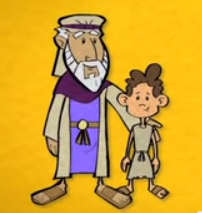
Eat well, exercise, get enough sleep, and practice discipleship

A Super-Disciple!

It is easy to understand why Jesus assembled a crew of special disciples. Jesus needed help!

Enter, the Super Disciples!

These were not just average, I-like-the-sound-of-what-you-are-preaching, admirers. Jesus invited his apprentice good-news-broadcasters to come, follow me; become my students.

Fairly early in his ministry, they were called to receive basic training in Super Discipleship.

These selected followers saw it firsthand: God was up to something big! Here was a belief system that changed how you looked at everything! Transformed lives! And though they stumbled at times, Jesus’ disciples ended up doing an admirable job of spreading the good news about Christ, especially once they had the Holy Spirit.

Today Jesus still needs disciples to work at transforming the world. What about us?

Are we ho-hum fans, or are we Super-D disciples of Jesus?

 
It shouldn’t be a surprise that we need to work at becoming the latter.
How? It’s just like learning to play an instrument: we practice!

But how does one practice becoming this sort of committed disciple?

Here are some thoughts to ponder in forming a disciple-practice-plan:

  • Gather your family — how about around the dinner table? Read some of the stories of Jesus “calling” his disciples – fishermen, a tax collector, and others. Note that sometimes eventual followers were skeptical at first. Are we allowed to wonder at the mystery of what God is up to? You bet!
  • Next, discuss with your family what the difference is between an everyday follower and an in-it-for-the-long-run disciple like Peter and Matthew and James and John? How would it look if your family just “said” you were Jesus-followers vs. acted like you meant it? Would anything change or are you on that path now? Would you have to give something up? Is being a disciple of Christ one more thing to add to our to-do list? Or is it a new way of living?
  • According to your definition of a “Super Disciple,” tell stories of when you encountered someone like that. What was it that made that person memorable? What could you emulate? Perhaps you could invite a voted-upon Super D to share a supper with you?
  • Discuss which of these areas need your focus:
     A check-box On-going Christian education (not just for the kids!)
     A check-box Worshiping together as a family.
     A check-box Celebrating Communion together as a family.
     A check-box Regular Bible reading and prayer.
     A check-box Participation in mission to others.
The Rule of Discipleship: Worship, Devotion, Compassion & Justice

As United Methodist followers of Jesus’ teachings, we are guided in our quest to be Super Disciples by what is called “The General Rule of Discipleship” which is described in The Book of Discipline of The United Methodist Church as: following Christ “through acts of compassion, justice, worship, and devotion under the guidance of the Holy Spirit.”

This means we practice being disciples by inward, life-giving means such as worship and “devotion” (prayer and Bible study), and by outward participation in God’s mission for the world: seeking justice and having compassion for others.

Pastor Nancy Lynn told us about this in a sermon she preached at FUMC on September 7, 2014, saying: “These four acts reflect that our journey of faith is personal as well as social, private as well as public, inward as well as outward. And to grow and be healthy, we need balance between them.”
 
A person who commits to practicing can become a Super Disciple. How are you practicing discipleship?

-------


Photo credits:
A Super Disciple! was altered from an image by Jam Zhang, who licensed this photo on Flickr under a Creative Commons License.
The Rule of Discipleship symbol © 2014, The General Board of Discipleship of The United Methodist Church. Used with permission.

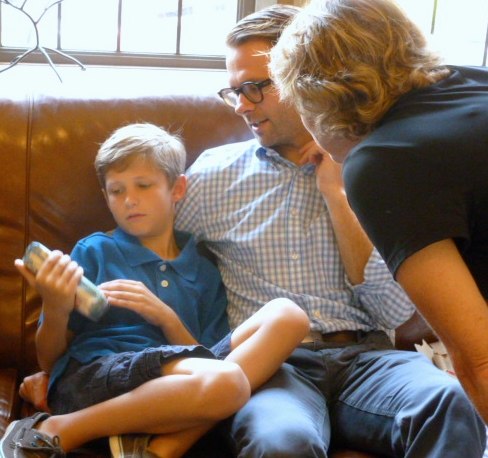
 

You have a hand in this

A bunch of gifts were handed out recently. Do you suppose that giving a gift will ensure that it gets used?

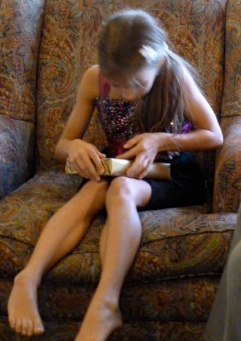
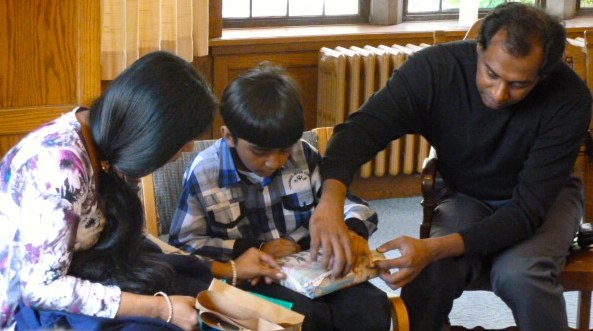
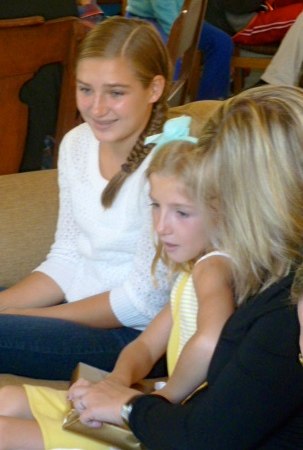
The 3rd graders and their families receive a new Bible during worship

Oh, if it were that easy!

Even the presentation of these Bibles was special. Will that do it? Will the memory of feeling significant and engaging in an unconventional ceremony remind those kids to pick it up and open it’s pages?

I doubt it.

Let’s review how it went (for an excuse to show the pictures) and then, we’ll talk about how to ensure your new Bible is used.


the top layer is gift wrap
the 2nd layer is brown paper

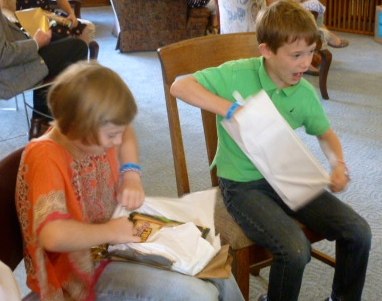
This gift was wrapped in several layers of paper – each layer having significance, which was revealed, as each layer was peeled back, during the class that happened after these Bibles were received.

The first layer was bright wrapping paper. After all, these Bibles were gifts from the congregation. And really, the Bible can be considered a gift from God! A gift giving us this picture: God is actively involved with his creation, and wants a relationship with us!

The second layer is ordinary brown wrapping paper! This old-looking wrapper reminds everyone that this is a book of very old stories; stories that have been told for thousands of years. Some of the stories are so old they were told even before people knew how to write! That is pretty old!

Ah, but we can always ask ourselves: What is God saying to me, here and now?

the third layer is the comics

The next layer is the funny pages! The comics tell stories. So does the Bible. We should always ask ourselves: why did people think this story was so important that it must be written down?

the next layer is gold paper

The next layer? It was gold paper, representing treasure. The Bible is a treasure more valuable than gold! Even gold cannot buy what we can learn from the Bible. And even more golden: In it’s pages you see that God is up to something big!

Finally! We are at the last layer – a blanket of fresh white paper. This layer represents a new start — growth. Adding to your understanding of who God is and how he wants us to “see that justice is done, let mercy be your first concern, and humbly obey your God” (Micah 6:8).

And the final layer comes off… to revel the Bible!

the final layer is ripped off revealing the Bible

And the digging in starts…

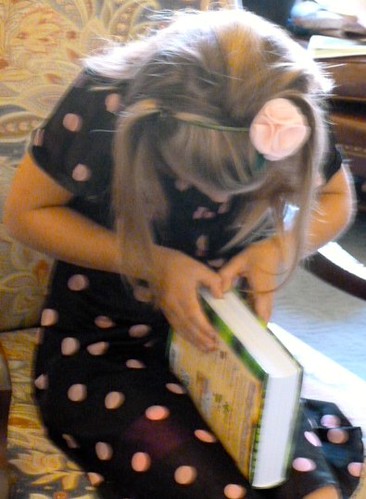
A  child looks for the Gospels a child checks out the Bible notes
She knows the quick way to find the New Testament! Look at all of the special notes!

They’ve opened up the Bible! How can you be sure this happens frequently?

  • Set aside a time every day to read it. Make it a habit. You read books to your kids everyday, how about including the Bible in the line up? Or perhaps pull it out at the dinner table. Readers can take turns with a verse or two.
  • Take it with when you’re going someplace where there will be time to read.
  • How about encouragement from a non-family member? Ask one of the third graders (or any kid) when you greet each other in church: “What interesting thing did you learn from your Bible this week?”
  • Subscribe (up at the top, on the right when viewing the blog page) to receive an email every time there is a new post (which will generally include a new idea to use your Bible).

3rd graders with their new Bibles

We have hope that our children will read the Bible, not to read a book of rules, but to discover and connect with God! What are your ideas for ensuring the Bible is opened?


Photo credits:
Photos are from my archives.

Are you seeing ads? They are not from me! They are placed by WordPress, who otherwise offers a free platform from which to share lots of good-ness. If you see an inappropriate ad, please report it to support@wordpress.com. Include the URL, the date/time the ad appeared, and a screenshot of the ad.

Who do you want to become?

Do you remember that persistent question you faced from a very young age?

What do you want to do when you grow up?

I always hated that question. (Because, how did I know?)

I believe we are asking kids (and ourselves) the wrong question. Instead we should be asking…

Who do you want to become?

We are surrounded by a culture where the focus is on “appearances.” Who thinks about what a person can become? People are impressed by good looks, by how well you speak or how strong you are. How are we to help our kids combat this bias?

By teaching them to look inside.

Our current Rotation is a good place to start. In our story, David is chosen as the next king of Israel. Can you hear his family sputtering, “Him? He’s just a young boy; a lowly sheep-keeper.”

Ah, but we learn that God doesn’t look at outside qualities, he looks at our inside, at our heart.

word art

Here’s what God tells Samuel about why David’s older brother, Eliab, wasn’t the one chosen king:

'Samuel, don’t think Eliab is the one just because he’s tall and handsome. He isn’t the one I’ve chosen. People judge others by what they look like, but I judge people by what is in their hearts.  1 Samuel 16:7
What did God “see” in David’s heart?

Potential!

David is thought to have been between 10 and 15 years old when he was designated as Israel’s next king, but he didn’t take the leadership right away. David continued to care for sheep, building courage, a good leadership quality. David also wrote Psalms. We can look in his Psalms to find other seen-by-God heart characteristics.

Bring out a Bible and read the following Psalms. Try to figure out the heart quality conveyed.

  • Psalm 23 “The LORD is my shepherd; I shall not want…” (Potential expressed heart-quality: Trust)
  • Psalm 5:7 “I am filled with wonder as I bow down to worship.” (A worshipful attitude)
  • Psalm 139:14 “I praise you because of the wonderful way you created me. 
Everything you do is marvelous! Of this I have no doubt.” (Gratitude)
  • Psalm 5:3 “Each morning you listen to my prayer, as I bring my requests to you and wait for your reply.” (Asking for help)
  • Psalm 19:11 “By your teachings, Lord, I am warned; by obeying them, I am greatly rewarded.” (Obedience)
  • Psalm 25:11 “Be true to your name, Lord, by forgiving each one
of my terrible sins.” (A repentant attitude)
  • Psalm 16:2 “I say to God, ‘Be my Lord!’ Without you, nothing makes sense.” (taken from The Message) (Realizing the importance of a connection to God)

God sees these qualities and possibilities in each one of us; each person is important to God. God looks at who we can become.

Discuss with your family about what heart-attitudes you see in each other. You may be surprised!
Are their qualities you need to work on adding?

Who do you want to become?

-------


Photo credits:
Heart-shaped word art was created by moi, using Image Chef Word Mosaic.

To the mother who was so embarrassed…

I’ll bet you cringed when your child sighed loudly at all the wrong times in worship this morning.

Did his twitching, I-can’t stay-still-I’m-a-kid, bother you? Were his seemingly constant, questioning whispers so distressing?

Please know: It didn’t bother me!

Really. I welcomed his presence.

I'm bored

I’ll bet you wanted to melt away at the number of sheets of pew note papers he doodled upon. Or the way he dragged at your arm and gave you those sad eyes.

No matter! I rejoiced that I shared your pew!

I saw good parenting in action.

He may not be able to tell you who was a major (or a minor!) character in the Bible story, or what sort of music was played during the service, or list the finer points of the sermon. The important thing…

He was there! He watched you worship!

He held the hymnal with you when we all sang and followed along with his finger on the words. (At least for the first few hymns).
He heard everyone pray together the Lord’s Prayer.
He saw the offering plate encircling the Sanctuary.
He was vigilant when the pastor lifted his arms to invoke the Benediction.

He was learning about worship.

So, don’t be embarrassed! And please keep bringing your child to worship. It’s your job as a loving parent. Keep up the good work!

Love, Carol

a blue line


Photo credits:
Bored child adapted from a photo by Stephanie Jones on Flickr, under a Creative Commons License.

Are you seeing ads? They are not from me! They are placed by WordPress, who otherwise offers a free platform from which to share lots of good-ness. If you see an inappropriate ad, please report it to support@wordpress.com. Include the URL, the date/time the ad appeared, and a screenshot of the ad.

Are we good enough?

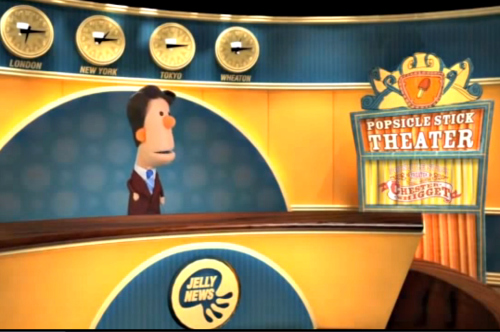
Buck Denver and Chester Whigget's Popsicle Stick Theater

Where has summer gone!? There is one week left to join us on our movie adventure. In the meantime, continue the learning at home!

Last week we learned about Esther. Our video included a presentation by Chester Whigget’s famous Popsicle Stick Theater. Watch the start of Esther’s story in this video. (If you are reading this in an email click here to view the video).

Yep. King Xerxes definitely had too much coffee. Here are some questions to talk about at the family dinner table. (Or wherever your family is gathered together.) You can ask these questions even if you missed the video showing last weekend! For other sets of discussion questions view here. If desired, print out this family discussion guide here. (Spread this out over several days.)

HAVE SOME FAMILY DISCUSSION…

  • Pass around a Bible. The person holding the Bible gets to be the one who shares their glads and sads for the day. (Or perhaps you call them peaks and pits?)
  • Just as a library has different types of books, so does the Bible! Did you know that there are books we call “History books” in the Bible? What sort of history do you suppose those books tell?
  • The books of History tell of the interaction of God with people in history. Why do you suppose that learning about God’s past interaction with people is important?
  • Esther is a book of History. What can you tell me about Esther?
  • Esther is good storytime reading. Read it together with feeling! (You may wish to paraphrase parts for the younger set.)
  • Did you know that in the book of Esther, God is never mentioned!?! Why do you suppose that is? (Scholars continue to debate this question!) Do you suppose it is for us to see that God is always with us even though he doesn’t get talked about?
  • Puppet Brother Louie from What's in the Bible? DVD

    God is always with us, but are we good enough for God? I mean, as humans we mess up all the time! (And we forget to ask God for help.) How can we be good enough for God? (Brother Louie asked this question in our video.)

  • Do we need God in our lives or can we do it on our own?
  • We are humans. We fail. We do things that separate us from God and from other people (we call that sin). What we learn from the historical books of the Old Testament is that people throughout history have tried and tried to be good enough for God. What usually ends up happening? (That’s right – they fail. Just like we do. But rather than being depressing, it points out our need for Jesus as our Savior!)
  • God used an ordinary woman named Esther to save his people. Do you suppose that God could use you to do something special? How does it change your life to know that God has something special planned for you to do?


Photo credits:
Click here for info on banner photo (not visible in readers or email).
Other photos from the producer of our video What’s in the Bible, under a fair usage category.

Are you seeing ads? They are not from me! They are placed by WordPress, who otherwise offers a free platform from which to share lots of good-ness. If you see an inappropriate ad, please report it to support@wordpress.com. Include the URL, the date/time the ad appeared, and a screenshot of the ad.

Being impressive or obedient – which one are you?

A collage representing parental involvement with their kidsAdults! Join your 1st – 6th graders on our movie adventure. It gives you an “easy in” for continuing the learning at home! Asking questions such as the one in this post’s title!
 
Here are some questions for the family dinner table. (Or wherever your family is gathered together.) You can ask these questions even if you missed the video showings. (For other sets of discussion questions on our summer movie series, view here.)

If desired, print out this family discussion guide here. (Spread this out over several days.)

Have some family discussion…
  • Pass around a Bible. The person holding the Bible gets to be the one who shares their glads and sads. (Or perhaps you call them peaks and pits?)
  • Take a look at the Table of Contents of your Bible. Find 1st Samuel. Does your Bible have a topical index – perhaps a Concordance – at the back? Look up Samuel and do some research!
  • Let’s see if we can quickly figure out the important characters in the book of 1st Samuel. What would be a way to do that? How about checking out the headings! (if your Bible has them.) Look at the heading at chapter 1; it probably mentions Samuel! It’s expected that a book by the name of “Samuel” means that he is an important character! Headings at chapters 9 and 16 give us other clues of who is in here.
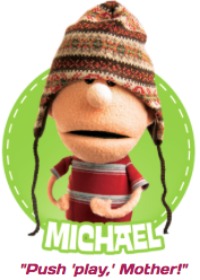
  • Puppet 8 year old Michael-the boy in the car seat
  • Samuel was a prophet. Michael, the boy in his car seat who introduces every video, says some funny things; I wonder what he would have to say about prophets? (He would probably think they were a type of candy bar! Isn’t it good to know it’s okay to get confused about words?) What do you know about prophets?
  • A prophet is someone that God uses to deliver messages; a prophet is God’s messenger. What message was God trying to tell King Saul? Here is a short video to see the answer:

    (If you are reading this in an email click here to view the video).

  • Read together 1 Samuel 13:13-14. God was trying to tell King Saul that he should serve only God. But Saul served God “halfway.” King Saul wasn’t always good at doing what God wanted him to do… when it came to following God, he was a failure! How good are we today at hearing God’s messages? Do we pay attention to God all the time? (To be honest, I’d say no!) How can we take better care at paying attention to God?
  • Read 1 Samuel 13:13-14. Samuel was telling Saul that because he hadn’t obeyed God he would be replaced… with someone who was a “man after God’s own heart.” What do you suppose it means to be a “person after God’s own heart?” (Lots of possible answers but I’ll bet that one of them includes someone who wholeheartedly serves God!)
  • In the video we watched above, Sunday school Lady says, “God doesn’t want us to be impressive, he wants us to be obedient.” What do you suppose she meant by that? How are we sometimes guilty of trying to be “impressive” rather than obedient to God?
  • God does replace King Saul with King David. What stories do you know about David? Read 1 Samuel 16:1-13b, about God sending Samuel out to find and “anoint” David. [Note: We’ll be studying this story in September 2014!] What does “anoint” mean? (Anointing is the process of pouring oil on someone, or something, as part of a ceremony that marks that person, or thing. for a special task.)

-------

Photo credits:
Collage was created by moi.
Michael photo is from the producer of our video What’s in the Bible, under a fair usage category.

How’s your home environment?

We are blessed to have homes that contain familiar “environments” — times and places where certain events take place. As our kids grow up they presume that at home they will find…

…a designated spot for family dining…

two kids at the dinner table
a space for play

…opportunity for play…

a child reads

…and time for reading (hopefully every day!)

Other environments we set up for our kids include a place to get some much needed shut-eye and an area for study. (Yikes, coming soon!)

It’s the way things are. Eating, sleeping, studying, playing… You could say:

It’s how we do it around here.

But something important is missing.

What about purposefully setting up space and time to experience God?
So it feels normal.

Here are some suggestions for adding this critical environment to your home:

  • an adult reads the BibleInclude the Bible in your daily reading roster. And make sure your child “catches you” reading.
  • Practice being grateful. (Documenting your gratitude brings attention to God’s gifts; they are everywhere! Even in the midst of darkness!)
  • Spend time as a family with everyone sharing one glad and one sad for the day – AKA: Glads and Sads, or Crowns and Thorns! Don’t try to fix anything, just listen and celebrate and commiserate.
  • Start every meal with a table blessing. Try here for some new ones.
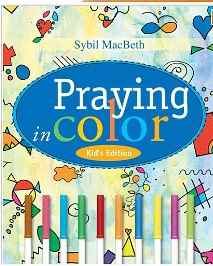
  • Introduce new ways to talk with God – prayer. (Get out markers to pray? Yes!)
  • Offer your child a daily blessing – words said out loud that reassure your child that they are loved and accepted.
  • What other ideas would you add?

--------------

Photo credits:
Dinner table by Sean Dreilinger; Reading by John Morgan; Swing set by Wouter Verhelst all licensed on Flickr, under a Creative Commons License.
Adult reading the Bible by StockSnap on Pixabay released under Creative Commons CC0 1.0 Public Domain.

More Big Questions (about Genesis and Psalms)

Captain Pete's cannon

It seems appropriate that Pirate Pete would introduce us to a new word: “Canon.” But wait Captain Pete, I think that your cannon has two many n’s. What’s a canon (with just one n) and what does it have to do with the Bible?

Ask this sort of question at your family dinner table. (Or wherever your family is gathered together.) Ask these questions even if you missed our video showing last weekend. Join us for another movie adventure on August 10th!

Note: To print out this particular family discussion guide, click here.
For other sets of discussion questions view here.
In the meantime…

HAVE SOME FAMILY DISCUSSION!

  • The word “canon” comes from a Hebrew word which means “measuring rod.” Over time, the word canon came to refer to a norm or a standard. “Later it came to mean a rule of faith, and eventually a catalogue or list. In present usage it signifies a collection of religious writings.” [1] We came to talk about canons (not cannons!) because our big question with Buck Denver was:

    Who picked the books to be in the Bible?

    Big Questions with Buck Denver

    We got a little bit of church history in our video when we heard about how the church leaders in the 4th century picked or canonized, the books to be in the New Testament of the Bible.

  • All of the books in the Bible tell us one big story. What would you say is that one big story? (Lots of answers, but the one we are focused on is that the Bible is the story of God and what he’s done for us.)
  • What do you suppose God has done for us? (Lots of answers, including promising to always love us, to have a special relationship with us, and to give us second chances – i.e., grace – when we mess up.)
  • Abraham has a son

    God has made promises to people in the Bible. Who remembers the promises God made to Abraham? (many off-spring, & land to live on, & to be a blessing to the whole world.)

  • Why do you suppose we can trust God’s promises to us? (It’s okay if we’re not sure why! It is hard, but it takes having what we call faith — believing that God will do what he says he’ll do.)
  • Do: Play a rhyming game (start with “after a while crocodile… In a blizzard little lizard…”) After a bit tell everyone that in a sense, what you’ve been doing is creating poetry – a way of expressing ideas in rhyme. Did you know that the Bible has poetry in it? (Though not the rhyming type of poetry.) There is a whole book of poems; do you know which book it is? (Psalms!)
  • Psalms are poems written by people expressing their feelings to God. Go on a Psalm Hunt! Open the Bible to Psalms. (Ask your 3rd grade and up child to tell you the quick way to find Psalms.) Read each Psalm and see if you can figure out which category it belongs in. (Read one a night?)
Psalm Possible Categories
Psalm 8 Thanksgiving
Psalm 9:1-2 A complaint!
Psalm 22:1-5 Praise
Psalm 37:1-4 Words of Wisdom
Psalm 38:6-11 Journey Psalms – sung while traveling to Jerusalem
Psalm 100
Psalm 122:1-4
Psalm 133:1
Psalm 136

How did you do on this quiz? Check out some answers here.
It’s amazing to realize that we can tell God exactly how we are feeling!


[1] From the International Standard Bible Encyclopedia.


Photo credits:
Click here for info on banner photo (not visible in readers or email).
Other photos from the producer of our video What’s in the Bible, under a fair usage category.

Are you seeing ads? They are not from me! They are placed by WordPress, who otherwise offers a free platform from which to share lots of good-ness. If you see an inappropriate ad, please report it to support@wordpress.com. Include the URL, the date/time the ad appeared, and a screenshot of the ad.