Who was doing the seeking?

In our current Advent Rotation, we are learning about the wise men, who upon discovering an unusual new star, traversed from afar, looking for the new king. (In those days an unfamiliar star = a royal event; all great kings had a star associated with their birth.)

Arriving in Jerusalem these magi created quite a commotion with their inquiry…

A photo of the Milky Way Galaxy with the words from Matthew 2:2

These wise men were on a determined hunt for this new king. We don’t know how far they had traveled, or what sort of difficulties they came up against; they persevered.

But who was seeking whom?

Who got these magi started on their quest?
Who put the star up in the sky?
Who re-hung the star after their stop in Jerusalem? (Matthew 2:9)
Who guided them to find Jesus?

This seeking seems to be going both ways! Seeking Jesus is a beneficial practice, but what about considering that Christ also seeks us?

How would it benefit us to notice signs of God leading us to Jesus?

A friend offers assistance at the right moment.

A child asks a pointed question.

A word heard, sparks thoughts.

If we’re not looking, will we notice?

Talk with your family about God seeking us. Here are some questions to guide your discussion. Perhaps ask a few questions during a car ride. For an easy to print out version, click here.

Star clipartRead: Matthew 2:1-2.
Ask: What questions do you suppose the wise men asked before they started their journey? (How far will we have to travel? Will the star continue to guide us?)
Why do you suppose the magi left everything to go looking for Jesus?
I wonder how the star had that much pull in their lives?
Can you imagine God in his wonderous power, hanging a bright star as a sign to the wise men?
What was God hoping these wise men would do?
What has been your “star” leading you to Jesus?

Star clipartRead: Matthew 2:1-8
Ask: When Herod heard about the magi asking about “one born king of the Jews,” he called together the chief priests and religious teachers. What did he ask them?
What was their response?
How do you suppose Herod really felt about this “new king?”
How come these religious leaders didn’t act interested in Jesus?

Star clipartRead: Matthew 2:1-12
Ask: When the wise men saw Jesus, what did they do?
Do we worship Jesus like the magi did?
What is different?
We could say that the wise men were “wise” because they went looking for Jesus. How would we describe a not-so-wise person? (Too busy to look? Not willing to try hard enough?)
How could you help someone become “wise?”
Contemplate how the magi packed for their trip. How does a wise person “pack” for Christmas? (Plenty of patience?)

God loves you. He seeks your love in return!

Photo credits:
Our Milky Way Galaxy original photo by C. Malin of ESO, made available for use under a Creative Commons 3.0 License. Altered image to add Bible passage, by Carol Hulbert at Flickr.
A slightly altered (coloration, size) clipart star, from the Public Domain via wpclipart.com.

How many wise men? And other misguided notions…

Happy Advent! This is the perfect season to bring faith conversations to your family, and this blog will help. To ensure you don’t miss a thing (usually only one post a week, on our current story) subscribe over on the right. Enter your e-mail address to have posts sent directly to your inbox.

For family Advent ideas see this post.

When kids experience Workshop Rotation Model Christian education, this means they are learning and having fun at the same time! Scroll down to learn more about the workshops we used for an Advent “Rotation” on the Wise Men.

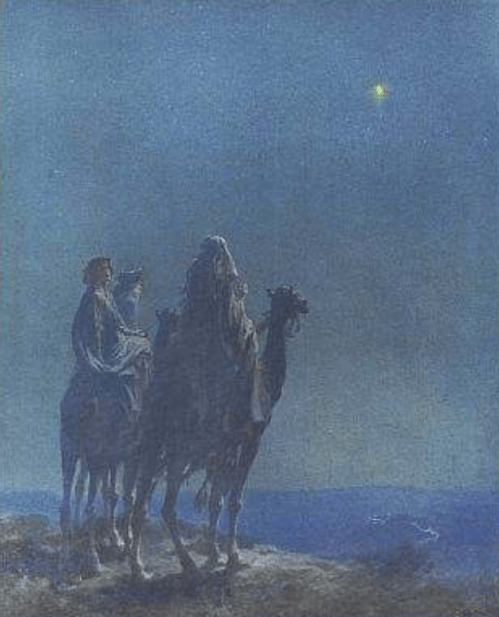
Wise men on camels ponder a star in the sky

Because Christmas happens once a year, each Advent we focus on a different aspect of the Christmas story. In the past we have covered Jesus’ birth through the eyes of the prophet Isaiah, the birth from his mother’s perspective, from the point of view of the shepherds, and the overall details and sequence of the Christmas story. This December we target the key role of the wise men. Read about our story in Matthew 2:1-12. You may be surprised to discover inaccuracies in some of your long-held views about these travelers!

  • In the Art Workshop students learned about the wise men, the magi, who followed a star to seek Jesus. They created a special star for their tree or their window at home. Also they heard about the church calendar and the seasons of Advent, Christmas and Epiphany.
  • In the Cooking Workshop students used some of their senses to explore the gifts of the wise men. They made no-bake cookies with a special scent and discussed gifts (the kind you can’t buy) that they give to others.
  • In the Video Workshop… one year students watched the animated video, The Very First Noel. They needed to watch carefully. Does the movie stray from the Bible story of the wise men? Do the wise men show up at the correct time? In a different year our older kids watched a presentation on what modern-day astronomers think about the Star of Bethlehem.
  • In the Games Workshop… one year students played games like Concentration and Pictionary to test their knowledge of the details of the story, but then their games were interrupted! They became “refugees” when they were “kicked out” of their workshop room. A reminder that Jesus and his family were refugees (Matthew 2:13-15) and that we are on a journey to seek Jesus.) In a different year our game tested our story knowledge by playing Bible Bowling. Some story facts may surprise you!
  • One year we used a Storytelling Workshop where kids heard and interacted with the book Mary’s Treasure Box. They experience touching and smelling items mentioned from the story. Then they played the “left-right” game to focus on story details. And took home a small box with many of the same elements. They could retell the story!

Why are we doing different workshops for the different times we’ve taught this story? There are several reasons including:

  • We used the Rotation Model for a lot of years! Stories repeated every six years.
  • Our focus for a Rotation changed (we’ve gained new understanding!)
  • We know our kids. We know what will, and won’t work with them.
  • We’ve got a new idea! Usually something we gained from Rotation.org!

Explore more about Rotation Model goodness! Where many of the lessons described above can be found in the entirety.

--------------
Photo credits:
“A Star in the East” by W. L. Taylor, 1900. in the Public Domain.

Happy New Year!

New Years eve fireworks to welcome in the new year with a display of light

No. My calendar pages are not out of order. And I realize that today is not January 1st.

But today is the start of a new year according to the liturgical calendar, which is the calendar that guides the seasons of the church year. Advent is the beginning of a new church year and Advent starts today! Thus, it is okay to go around shouting, “Happy New Year!”

Just what is the liturgical calendar?

Unlike the calendars we all carry with us, the purpose of the liturgical calendar is not to mark the passage of time. Instead, it is a calendar that repeats every year: Advent, Christmastide, the day of Epiphany, the season after Epiphany, Lent, Easter, etc, etc. Through this continuous cycling of seasons, we hear the stories of Jesus and the start of the church. It all begins today, with the season of Advent in which we prepare our hearts for Jesus to come into our world as a small baby.

Returning to the same stories?

With an annual revisiting of these stories do we find them a little bit different each time? Perhaps because we ourselves have changed?

As Joan Chittister says in her book, The Liturgical Year: The Spiraling Adventure of the Spiritual Life

Open quote markWe are older, wiser, more experienced. We are also more needy, less sure of ourselves, more greedy for life, and less sure of what it really is.

Paying attention to the changing church seasons can make us aware of how we fit into these stories.

Other clues to a changing season?

A chart showing the percentage of time for various sessions of the church year

The liturgical calendar is often displayed as a circle and certain colors mark each season. Look for changes in the colors used in worship – the cloths (called paraments) that cloak the altar or hang from the pulpit, or are worn by the clergy. (They may be purple or blue.) Look also for changed wording in the bulletin.

Happy New Year!

May you live your liturgical year with eyes open to your place in God’s story!


--------------
Photo credits… White Rocket Burst by christmasstockimages.com, is licensed under Creative Commons (CC BY 3.0).
View the pie chart I created here.


Purposeful Gratitude

In reading the story of Abraham and Sarah, have you noticed that Abraham has a habit?

He stacks stones.

A very balanced pile of rocks

No, Abraham wasn’t piling rocks in an artful manner such as the photo above. He built altars. He deliberately heaped soil and rock, forming a reminder. A physical stalwart to remind him of an encounter with God. He would use these altars in his worship to God and to remind himself of God’s promises of blessing.

In the season of Thanksgiving, how about we be as deliberate, and make our gratitude be purposeful. The key is to make this your new normal. Here are some ways to do this with your family:

  • Why not pile some rocks. Go out for a walk to collect stones. Once back at home, in a family gathering (perhaps at the dinner table), read about Abram’s altar building in Genesis 12:6-8 or Genesis 13:3-4 or Genesis 13:18. Make a pile of your rocks naming each one as a thanksgiving to God.
  • Take the next step and write thanksgivings on your rocks with a permanent marker, or use a glue and water mix (Modge Podge) to apply cut out pictures to your rocks.
  • Allow your rock pile to be re-built on a daily basis!
  • A "shrine" of things that invoke the memory of God's goodness

  • The Life Application Bible tells us that Abram built altars to “remember that God was at the center of his life.” Build a different sort of “altar.” Fill a space in your home with reminders of thankfuls. Allow touching and rearranging and additions and subtractions. (Photo on right is at the Nelson home around Easter time.)
  • With older children discuss ways people often build “monuments” to themselves or to their stuff. Why do you suppose we do this? How can we break into a new focus of being grateful?
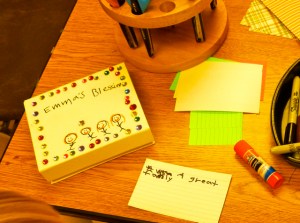
  • A blessing box - a place to store your blessings!

  • Fill up your family blessing box!
    If your child didn’t get to make one in our Art Workshop for the story of Abraham & Sarah, you can view the lesson here and download the instructions here. Decorate any old box!

What are other ways your family makes gratitude purposeful?


Photo credits:
Balancing rocks by Viewminder, who licensed this photo on Flickr under a Creative Commons License. “Shrine” photo from the Nelson family. Used by permission. Blessing box photo from my archives.

Are you seeing ads? They are not from me! They are placed by WordPress, who otherwise offers a free platform from which to share lots of good-ness. If you see an inappropriate ad, please report it to support@wordpress.com. Include the URL, the date/time the ad appeared, and a screenshot of the ad.

Become the blessing

Gather the family together and tell this story. Be prepared to stop for questions.

Once upon a time there was a man named Abram who heard from God. “I want you and your wife to be a part of something really big. Pack up and move far from here, and raise up a great big family; generation after generation! I promise to bless you richly, to give you much goodness! And in turn, you will bless the world!” (Genesis 12:2.)

Do you suppose that Abram often thought about those numerous descendants — the ones God had promised to him? I can just imagine him chuckling to himself as he watched the sheep, “When those grandchildren come, I’ll tell them all about the altar I built at the great oak tree in Moreh” (Genesis 12:6-7). “I’ll tell them how I didn’t see how, with all of those Canaanites around, the land would ever be ours! Ha!”

Have the adults in your family ever thought about their grandchildren-yet-to-be-born?
What about the kids; have you ever thought about your grandchildren?

I am sure there were times when Abraham’s doubts about God’s plan spilled over in frustration. I can imagine him grumbling to his childless self as he tended to the goats, “The Lord God can bless me all to pieces, but it won’t do any good. Copious kin! I don’t even have a son! I’m too old.” (Genesis 15:1-5).

Then there probably were times Abraham (God had given him that new name as a sign to remember God’s promises) wondered about “blessing the world.” As he leaned back his head to adequately view the marveling display of glimmering stars overhead, he wondered to himself, “What did God mean by that? I will be blessed… so that I can be a blessing? How can I be a blessing?”

Have you ever wondered how you can be a blessing?

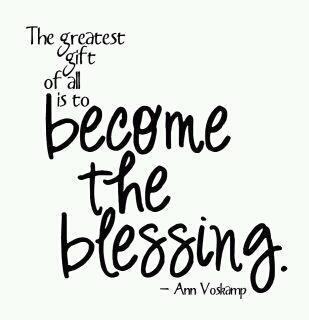
"The greatest gift of all is to become the blessing." A quote by Ann Voskamp.

We share God’s promises; they belong to us.

What are we doing to bless others?
Our family? Our friends? Our neighbors? The homeless man on the street? The store clerk? Our grandchildren (the one’s way off in the future)?

Abraham and Sarah teach us to respond faithfully to God’s call, even when it doesn’t make sense; even when our trust wavers. The payoff is great. (God promises it will be full!) God can’t wait to bless us! And in turn, God wants us to enrich the lives of others; it’s part of God’s plan to bless the whole world!

Photo credits:
Click here for info on banner photo (not visible in readers or email).
The quote above is from Ann Voskamp’s book
One Thousand Gifts. The word art was created by Deb Chitwood.


Are you seeing ads? They are not from me! They are placed by WordPress, who otherwise offers a free platform from which to share lots of good-ness. If you see an inappropriate ad, please report it to support@wordpress.com. Include the URL, the date/time the ad appeared, and a screenshot of the ad.

Take time to travel through the story

A public domain image: Abram Called to be a Blessing
(In Canaan) the Lord appeared to Abram and promised:
“I will give this land to your family forever.”
Abram then built an altar there for the Lord.
(Genesis 12:7)

The story of Abraham and Sarah winds it’s way through several chapters in Genesis, so here is a reading plan that breaks it down into manageable chunks. Print out this plan and over the course of several days (weeks!), have your family read the story together. Included are activities and questions to go with each reading!

a girl readingIf you’d like to print out this reading plan/discussion guide, click here.

Read in Genesis Talk about or do…
12:1 If God called you to suddenly move to a not-named spot, would it be an adventure, or something to avoid? Would you go? What would you pack?
12:1-5 Abram faithfully goes! He doesn’t know where he is headed! (The Bible can look in hindsight and tell us that he went to a land called Canaan.) Someone’s actions reveal their character. What type of person is Abram? What would you like your actions to reveal about you?
12:1,4 Have each person take a turn at being led while blindfolded. Talk about how this felt. (Trust was required!) How is our walk with God sort of like a blind faith walk?
12:4-7 Hey, wait a minute! But God said he’d give Abram this land and yet the Canaanites seem to have gotten there first. Yet what does Abram do? (Hint: 12:7 – he hears a repeated promise of land & builds an altar to worship God.) Name a time when your expectations didn’t meet what happened. How did you react?
11:31, 12:1 See if you can find on a map, all the places where Abram went. (Try this one.) Can you figure out how far Abram and Sarai traveled? What is the longest trip you’ve ever taken?
12:1-3 What does it mean to be blessed? (Ans: that you’ve received something good.) What does it mean to be a blessing? As Thanksgiving approaches, collect a list of your blessings. Everyone write or draw a blessing. Place them in your box you made in the Art Workshop! (or save them up if you haven’t visited Art yet.)
12:1-7 God has both made commands and promises to Abram. What has God asked Abram to do? What are his promises? Why does the promise to make Abram into a great nation (which requires lots of offspring) seem like a farfetched dream? (Hint: 11:30) What outrageous promises have you received?
13:14b-18 God is reminding Abram of the promises he has made. Abram used altars he built out of rocks to remind himself of encounters with God. Go on a walk and gather a few stones. Take them home & build a table-sized “altar.” Periodically restack the stones. Remember God is always with you.
15:1-7 Abram doesn’t bottle up his feelings! He tells God about his doubts. When have you doubted God? (It is okay to share your doubts with God!) What reminders of his promises has God given you?
15:5 Plan a star gazing night. What do the number of stars represent for you?
15:18a, 17:1-4 What is a covenant? (Look up the definition in your Bible dictionary.) A covenant is like a special agreement including a promise. What examples of covenants (special promises) can you think of? Write a family covenant that everyone can participate in. Bonus Q: What does the little “a” mean, after the 18?
17:1-9 How old is Abram? (99!) Look back at 12:4 to see how old Abram was when our story started. How many years has Abram waited for God’s promises? Why do you suppose God waited so long to fulfill the promise of a son? What can we discover in waiting for God’s promises?
17:3-5, 15 Caregivers: provide the story of how your child’s name was chosen. If you could change your name, what would you change it to? What if your name change signified a change in relationship with God?
17:7-9 What does God mean when he says that this is an “everlasting covenant?” What does this mean for us? Hint: check out 17:7 (it’s our key Bible verse). Develop a family cheer using the words: “God is our God!”
18:1-15 Who are these three visitors? What do you make of the way Abraham treats them? How do you treat visitors?
17:15-17, 18:10-15 Why do Abraham and Sarah laugh? Tell about a time you laughed at an inopportune time. Speculate about what makes God laugh.
21:1-3 What does this story teach you about God? What long-awaited event has brought you the most joy?
Bonus questions: How are Jacob & Esau related to Abraham? How about Joseph? Draw the family tree.


Photo credits: Click here for info on banner photo (not visible in readers or email).
Abram worships God in thanks for God’s promises, by Providence Lithograph Company, circa 1906; in the Public Domain via Wikimedia Commons.

Abraham & Sarah: November Schedule

Welcome! Join us as we offer ways to enrich your family’s faith journey. Extend once a week “church school learning” into your everyday!
May I be so bold as to suggest you sign up for future posts? Enter your e-mail address over on the right, to have posts sent directly to your inbox. (There is usually one post a week.) Or click on the orange RSS icon to subscribe in a reader.

To see a growing list of opportunities to foster faith learning at home for our current Rotation story :: click here.

Abraham looking up at the stars

In November we are continuing the story of Abraham and Sarah. Read our story in Genesis 12:1-9, 13:14b-18, 15:1-7, 15:18a, 17:1-9, 17:15-17, 18:1-15, 21:1-3. Note that this is a long story and portions of Genesis are being skipped on purpose!

a speech bubble
Bonus Question for the Kiddos: Why is Abram star-gazing?


On Sunday’s at the Downtown location…

Date Our workshops…
11/3 Enjoy worship and Communion with your family
Video Art Games Puppets Cooking
Pine Room Room 212 Room 211 Room 215 Social Hall
11/10 3rd grade 5th & 6th grade 1st grade 4th grade 2nd grade
11/17 4th grade 1st grade 2nd grade 5th & 6th grade 3rd grade
11/24 5th & 6th grade 2nd grade 3rd grade 1st grade 4th grade

For Saturdays at the Green Wood location, here is the schedule…

Date Workshop or Activity
11/2 Attend a special worship service with kids in leadership roles.
11/9 Cooking Workshop
11/16 Art Workshop
11/23 Video Workshop
11/30 Worship with your family and enjoy the holiday weekend!

What’s happening in each workshop?

  • In the Art Workshop students will discuss blessings in their lives and how they can bless others. They will create and learn how to make use of a blessing box.
  • In the Cooking Workshop students will make sugar cookies to give to others who are blessings in their lives.
  • In the Games Workshop students will participate in a Trivial Pursuit type of game to learn story details.
  • In the Puppets Workshop students will use handle-bag puppets to enact the story.
  • In the Video Workshop students will watch portions of an animated video on our story, Covenant Discovery, from the Great Bible Discovery series. Explore how we trust God’s promise.


If you are in the area please join us for the fun learning at First United Methodist Church in Ann Arbor, MI. On Saturday nights and on Sunday mornings, children ages 3 to 6th grade experience Workshop Rotation Model Christian education, as they learn about Bible stories and concepts through kid-friendly, fun, multimedia workshops.


Photo credits:
Click here for info on banner photo (not visible in readers or email).
Abram is awed by the number of stars in the sky by Stjepan Mokatelo, via Christian Clip Art.

Are you seeing ads? They are not from me! They are placed by WordPress, who otherwise offers a free platform from which to share lots of good-ness. If you see an inappropriate ad, please report it to support@wordpress.com. Include the URL, the date/time the ad appeared, and a screenshot of the ad.