Ten Questions You Should Ask

Chuck Waggin from What's in the Bible? DVD series
Chuck Waggin says:  Yep. There are at least ten questions every family should be talkin ’bout. Come on down and join us at our weekly movie adventure. Y’all, it’s the purrrfect excuse to bring up topics for discussion at home – on account of y’all watched the video. See ya there?

Last week we watched a video about the Gospels. Here is a short bit from our video… (if you are reading this in an email click here to view the video).


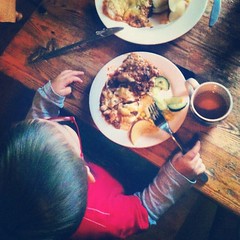
Here are some questions to talk about at the family dinner table. (Or wherever your family is gathered together.)

You can ask these questions even if you missed the video showing last weekend! For other sets of discussion questions view here. If desired, print out this family discussion guide here. (You can spread this out over several days.)


HAVE SOME FAMILY DISCUSSION…

  • Pass around a Bible. The person holding the Bible gets to be the one who shares their glads and sads for the day. (Or perhaps you call them peaks and pits?)
  • Open up the Bible and point out (or ask your child to find) the Gospels.
  • What does the word “gospel” mean? (good news) Talk about what is this “good news.” How has it made a difference in your life?
  • What are the names of the four gospels? Who wrote each one? (Watch the video above to find some answers). Why do you suppose that there are different gospels?
  • Chuck Waggin
  • Chuck Waggin is a country western, singing member of the What’s in the Bible? movie. See if your family can come up with a country western tune that teaches the names of the four gospels. ♩♫  (Bonus: Add the rest of the books of the New Testament!)
  • Find the first book of the New Testament – Matthew. Note how chapter one starts off — with the genealogy of Jesus. What is a genealogy? What do you know about your family genealogy? (Draw a family tree!) Why do you suppose Matthew included a genealogy? (it connects the OT to the NT)
  • What important things did Jesus do? (review some of Jesus’ miracles & teachings) If someone asked you to summarize the gospels, what would you say?
  • Make a list of words that summarize what the gospels teach. Play a game of “How Few Can You Do.” In this game you take the list you created and try to reduce it to as few key words as possible. How did you do? Share your words with the community!


Photo credits:
Click here for info on banner photo (not visible in readers or email).
Other photos from the producer of our video What’s in the Bible, under a fair usage category.

Are you seeing ads? They are not from me! They are placed by WordPress, who otherwise offers a free platform from which to share lots of good-ness. If you see an inappropriate ad, please report it to support@wordpress.com. Include the URL, the date/time the ad appeared, and a screenshot of the ad.
The summer learning continues

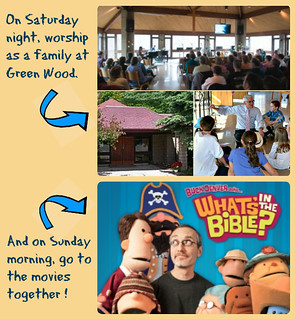
A collage representing parental involvement with our programmingAdults! Join your 1st – 6th graders on our movie adventure. (It gives you an “easy in” for continuing the learning at home!)

Here are some questions for the family dinner table. (Or wherever your family is gathered together.) You can ask these questions even if you missed the video showings. (For other sets of discussion questions on our summer movie series, view here.)

If desired, print out this family discussion guide here. (Spread this out over several days.)


HAVE SOME FAMILY DISCUSSION…

  • Pass around a Bible. The person holding the Bible gets to be the one who shares their glads and sads for the day. (Or perhaps you call them peaks and pits?)
  • Usually when you open a book one of the first things you notice is the author. Does it say anywhere, who is the author of the Bible?
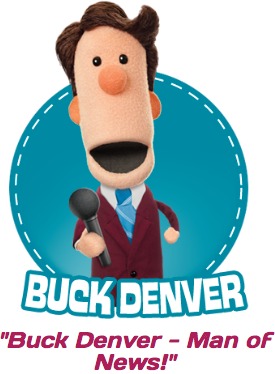
  • Buck Denver, Man of News!
  • Our most recent “BIG QUESTION with Buck Denver” was: Who wrote the books of the Bible?
    Does anyone know the answer?
    Is this one of those questions where it’s important that we know the absolute answer? OR is it more critical that we trust these writings because they are in the Bible, not because of who wrote them?
    [Read here for more info on the Methodist view of the Bible.]
  • Let’s dig into the Bible! What is the name of the first book of the Bible? Why is it appropriately named? (Watch a short video of a song about the meaning of the word “Genesis.”)
  • Read together Genesis 1:1-31. Do we know for sure when all this happened? Some say 6000 years ago, others say 4.5 billion years ago? Who is right?
    Phil Vischer (the producer of our video series) tells us: Not all Christians agree about everything. Some believe the 
word day in the Bible means a “24 hour period” and some believe “God days” can cover 
millions of years.
    How does living with mystery often define our faith?
  • Read together Genesis 3:1-21.
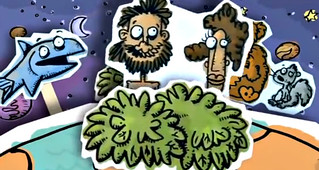
  • Chester Whigget's Popsicle Stick Theater show of Adam & EveBetween Popsicle Stick theater and Chuck Waggin’s singing we were introduced to the concept of sin and God’s rescue plan.

    What is sin?

    Why do we need rescuing?

    Note: These are heady concepts! Work at them slowly. Ask questions.

    A simple definition of sin: anything we do that separates us from God.

    Why do we need a rescue plan from God? Watch this short video…

    Stay tuned for more each week. See you in church.


    Photo credits:
    Click here for info on banner photo (not visible in readers or email).
    Other photos from the producer of our video What’s in the Bible, under a fair usage category.

Are you seeing ads? They are not from me! They are placed by WordPress, who otherwise offers a free platform from which to share lots of good-ness. If you see an inappropriate ad, please report it to support@wordpress.com. Include the URL, the date/time the ad appeared, and a screenshot of the ad.
Don’t think of it as summer school

We’re off to the movies! This summer, we hope you’ll join us on our movie adventure and also, continue the learning at home.

Summer school! (But don’t tell the kids!) Really! This is to help you pass along your faith to your child(ren)! Here are some questions to talk about at the family dinner table. (Or wherever your family is gathered together.)

You can ask these questions even if you missed the first video showing last weekend!

Parents and caregivers: want to get a feel for the video? Click below to watch the first five minutes of our first video. (Or click here if you are reading this in an email.)

Don’t you agree that this is for adults and their kids? Join us!

You’ll both be learning together at the movies!

And, by using the questions below, you’ll both be learning together at home!

If desired, print out this family discussion guide here. (You can spread this out over several days.)

HAVE SOME FAMILY DISCUSSION…

  • What is a favorite book that you have recently read?
  • What if a friend told you that the Bible was their favorite book, what would you say?
  • Why do you suppose we should read the Bible? (No right or wrong answers!)
  • Buck Denver, Man of News!
  • Buck Denver, one of the main characters in our video series, asks a BIG question in the first video: What is the Bible? How would you answer that question? (To watch a one minute video of some kids with their answers to this question, view here.)
  • Tell your kids that you’ve learned how to carry 66 books with one hand! Then show them how you do it, by picking up a Bible! Yep, the Bible is like a library; there are 66 books in the Protestant Bible! [1]
  • All of the books in the Bible tell us one big story. What would you say is that one big story? (Lots of answers, but the one we are focused on is that the Bible is the story of God and what he’s done for us; something that we like to call “God’s Rescue Plan”).
  • Take turns remembering stories in the Bible. Then take turns naming what that story tells us about God and what he’s done for us. (For example, our last Rotation, the Walk to Emmaus: Jesus is always with us.)
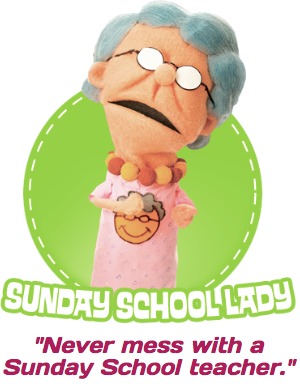
  • Sunday School Lady

  • Sunday School Lady (a professional Sunday school teacher) tells us about the Old and the New Testament, and their different sections. [You can watch this part on-line in a new window.] [2].
  • First off, what is a “testament? (The word “testament” comes from the Latin word testamentum, which means “oath” or “covenant.” A covenant and an oath are promises with conditions, so the word testament essentially means a “promise.”)
  • Promises! More about what God has done for us! (His Rescue Plan!) Why do you suppose God made promises? (Hint: it has something to do with love!)

Stay tuned for more each week. See you in church.

[1] For older kids, add in discussion about how the number of books in the Bible is different in Catholic and Protestant Bibles. Do some research starting here and here.

[2] If your child asks about the “end of the world” (mentioned in Sunday school lady’s description of the book of Revelation), admittedly the end of the world sounds kind of scary! Some people use the words “the end of the world” to describe the time when all people will love and care for each other and obey God. (That doesn’t sound bad!) In the early days of the church some followers of Jesus (for example, Paul) thought that this would happen soon! Some even stopped working because they figured, why bother! (Read about it here.) Of course it hasn’t happened yet, so nothing to worry about! Besides it gives us plenty of time to, as John Wesley says, go on to perfection.” (Which means we’re working on Matthew 22:37-39).


Photo credits:
Photos from the producer of our video What’s in the Bible, under a fair usage category.

Are you seeing ads? They are not from me! They are placed by WordPress, who otherwise offers a free platform from which to share lots of good-ness. If you see an inappropriate ad, please report it to support@wordpress.com. Include the URL, the date/time the ad appeared, and a screenshot of the ad.
What is this Big Game?

Coming up this Sunday at the downtown location is THE BIG GAME!

It’s where we review the year’s stories, and see if the 6th graders are smarter than the rest of us! What’s it look like? Let’s review!

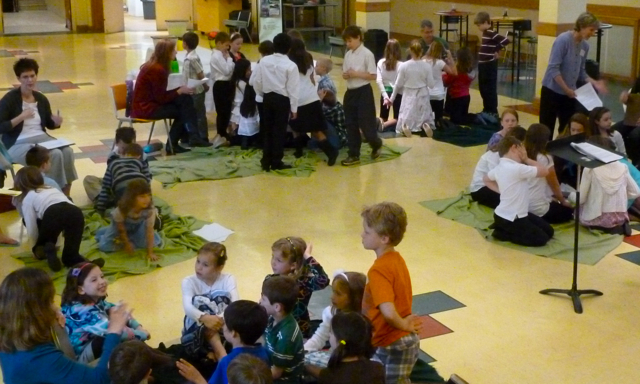
Everyone meets in the Social Hall and gathers in their grade groups. (These pictures are from former year-end Big Games. It’s an annual tradition!)

Everyone gathers together for the big game

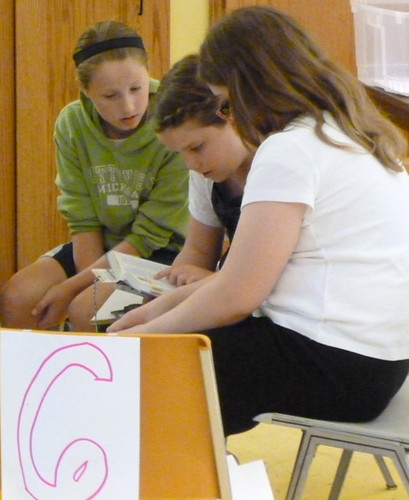
The 6th graders (and any adults) get to sit on chairs! But that doesn’t guarantee a winning answer for the 6th graders!

The 6th grade gets to sit on chairs at the Big Game

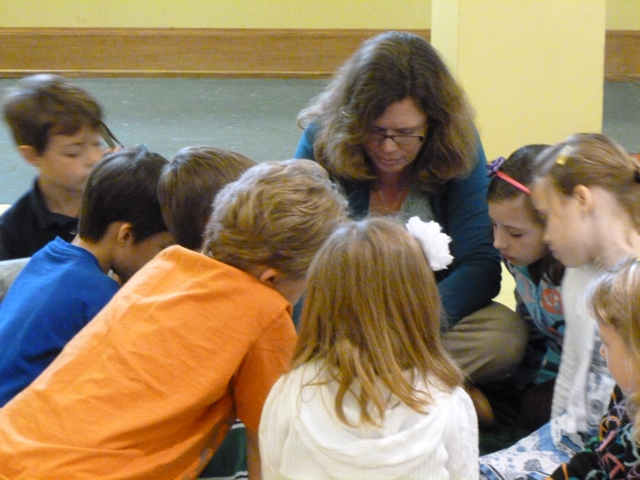
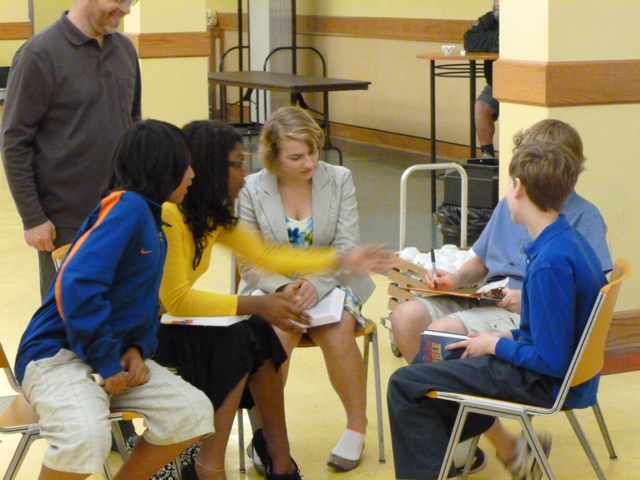
We work as grade groups to collaborate on our answers to those tough questions…

A group gathers huddles together to work on an answer at the Big Game

Bibles are allowed (but we better be fast!)

The 6th graders search for an answer in the Bible

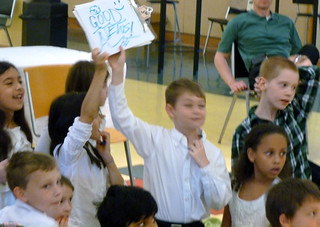
We take turns being the one to present our answer. Is it correct?

A group presents its answer

In review, here are the stories we’ve covered since last September (for the Big Game of 2014):

Another group huddles up for an answer

Help your kids by reviewing these stories.

And feel free to visit the Big Game and join in on the fun! (We’ll let you sit in a chair if you’d like.)

a blue line


Photo credits:
Photos are from my archives.

Are you seeing ads? They are not from me! They are placed by WordPress, who otherwise offers a free platform from which to share lots of good-ness. If you see an inappropriate ad, please report it to support@wordpress.com. Include the URL, the date/time the ad appeared, and a screenshot of the ad.
How to promote pondering?

Tonight, at the dinner table, “noodle around” and ruminate. Reap the benefits!

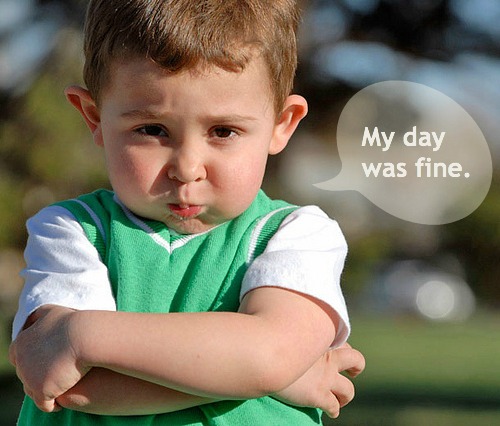
A young boy says sarcastically: my day was fine

Does this sound like conversation in your household?

You: How was school today?

Child: Fine.

You: What did you learn?

Child: Nothing.

Sometimes it can feel like pulling teeth!

Try turning your inquiries into a dinner table game.

Open quote mark Tell me two things that really happened today and one thing that didn’t happen, and I’ll try to guess which ones are true!

This suggestion comes from a book by Drs. Daniel Siegel and Tina Payne Bryson, The Whole Brain Child: 12 Proven Strategies to Nurture Your Child’s Developing Mind. ← (That is the link to the Ann Arbor District Library’s copy of the book.) Now, admittedly this line of questioning probably won’t go over well with older kids — for them try asking for a “true” opinion and a “false” opinion they hold on some newsworthy subject.

Regardless of the discussion topic there is benefit to this inquiring tactic — besides revealing your child’s activities, or learning how they feel about life — kids unwittingly receive practice in pondering.

What is so important about honing reflection skills?

Asking children to dig back into their memory is known by educators as essential to moving learning to long-term storage. Reflection has been described as the “mind’s strongest glue.” [1]

So promote some pondering! Let’s continue to mull over the events of Holy Week. Use the chart below to read and talk about the next portion of our story.

If you’d like to print out this reading plan/discussion guide, click here.
Or, check out the other mini reading plans for our Rotation on the events of Holy Week here. If your kids aren’t clear about the order of the events of Holy Week, start at the beginning.)

Read Talk about or do…
Matthew 26:36-39 What are Jesus’ feelings? If you were facing some sort of crisis, what three friends would you ask to be with you?
Bonus Q: Who were the two sons of Zebedee? Hint: Luke 5:10-11.
Mark 14:32-26 Tell about a time when you knew what was coming up; you knew what you were up against. Did you follow through? What is Jesus asking of God? What does he mean by “the cup?” (He’d like a way to avoid the cross!) What model does this give us as to how we should approach God?
Matthew 26:39-41 Why do you suppose the disciples fell asleep? What is another way to say, “my spirit was willing but my body was weak?” (I knew what the best thing to do was, but…) Name an instance when this happened to you.
Luke 22:41-45 Jesus is being very honest with God. What is something that you’d like to admit to God but are afraid to do so? Luke is the only gospel which includes the angel helping out Jesus and Jesus sweating blood. Do you suppose that Luke being a doctor had anything to do with the latter inclusion? (It has a medical name: Hematidrosis. Research this on the internet.)
Matthew 26:44-47 Do you suppose Jesus felt let down by his disciples? When is a time when someone let you down? Tell about a time when you may have let Jesus down.
Mark 14:43-46 What do you suppose is going through Judas’ mind? Who were these “chief priests” and why were they interested in arresting Jesus? (Review who they are here. Review why they are out to get Jesus by reading one example at Matthew 12:9-14.)
Luke 22:49-51 Why do you suppose Jesus’ followers were so quick to bare their swords? (and also seemingly quick to fall asleep!) What would you have done? How do you suppose the guards felt when they saw Jesus heal the man’s ear? Do you suppose they wondering: are we arresting the right guy?
Matthew 26:47-56 Explore the differences in the way the gospel writers tell this portion of the story — in Mark 14:43-50, and in Luke 22:47-53. The disciples go from sleeping on the job, to wielding swords, to running away. What about this surprises you? How would you have reacted to these events?
How do you value and encourage pondering in your family?

-------

[1] Kate Charner-Laird, Sarah Fiarman, Frederick Won Park, and Sylvia Soderberg, Cultivating Student Reflection: A Step-by-Step Guide to Fostering Critical Thinking in Young Children, Issue 6 (Dorchester, MA: Project for School Innovation, 2003).


Photo credits:
Pouting child, by Sergio Vassio Photography, licensed on Flickr under a Creative Commons License. (Picture was cropped and text added by me.)

The strangest things can happen around your table

What happens around your family dinner table?

a very messy eatera boy eating at a table

  • Food is served (and sometimes eaten).
  • Conversation unfolds.
  • Stories are told.
  • Things get messy.
  • Games are played.
  • Bread is broken.
  • Memories are made.

Here’s a table where I’m sure this happened…

Last Supper, 1896 work by Pascal Dagnan-Bouveret
Jesus and his disciples share the Last Supper

Well, okay. They probably didn’t play any games.
(But don’t that that stop you! See here for suggestions of games to play at the dinner table.)

What happens around your dinner table?
Are questions expressed, discussion encouraged, and disciples of Jesus cultivated?

Why not start today? Use this mini reading plan with discussion questions.

If you’d like to print out this reading plan/discussion guide, click here.
(Check out the other mini reading plans for our Rotation on the events of Holy Week here. If your kids aren’t clear about the order of the events of Holy Week, start at the beginning.)

Read Talk about or do…
Luke 22:7-15 What is your favorite mealtime gathering? What sort of preparations are required? What is served at this meal? Why do you enjoy it?
Why do you suppose Jesus “earnestly” wanted to share this meal with his disciples?
Mark 14:12-16 What is the Festival of Unleavened Bread? What is the Passover lamb? (Hint: look at Exodus 12:1-14.)
How likely do you think it would be for the disciples to find a man carrying a jug of water? (Remember this is back in Jesus’ time when water retrieving was strictly women’s work.) There seems to be a bit of secrecy to this planning. Why do you suppose that was needed? (Remember what sort of danger was Jesus in.)
Describe the details about how you would plan a secret location for a party.
John 13:1-5 Name the worst clean-up task that you can imagine. (Perhaps cleaning up after a sick puppy or washing the kitchen floor after a mishap involving a dozen raw eggs?)
Why do you suppose the disciples feet needed washing? (Hint: think about their footwear and the roads in those days.)
John 13:1-11 Why do you suppose Peter didn’t want Jesus to wash his feet? Would you want your teacher at school to wash your feet? Name someone whom you’d never want to wash your feet. Why not?
What do Peter’s feelings tell us about his relationship to Jesus?
John 13:12-17 How is washing someone’s feet an act of service? What do you suppose Jesus meant by saying that his disciples should wash other people’s feet? Did he mean literally??
Get out a small basin, some soap and a towel. Put some warm water into the basin and wash each others feet. What are you thinking as your feet are bathed?
John 13:14-15 We know what will happen to Jesus. We know how Judas will betray him, and Peter will deny him. Yet Jesus washes both Judas and Peter’s feet! Think about an act of service that you would struggle to do for someone, if you knew they were going to be mean to you in the future.
Name some acts of service we can do for others. Are these hard or easy to do?
Matthew 26:20-25 What reaction do the disciples have when Jesus drops this “bomb?” How would you have reacted?
The Bible doesn’t tell us why Judas snitched on Jesus. Some theorize that he wanted the money (John 12:4-6). Others propose that Judas was hoping that Jesus’ arrest would prompt Jesus to act more like the warrior king that the Jews had been expecting. (Or as one person has said: “Maybe Judas was throwing Jesus into the deep end of the pool, hoping he’d swim.” Quote source Have you ever wished that God would move a little faster in his plans for you? Have you ever betrayed someone’s trust? Can you describe why you did this?
Luke 22:19-20 What elements of a traditional Passover meal did Jesus turn around and give new meaning to? What is Jesus asking his disciples to do? What is he asking us to do? (Hint: reread Luke 22:19.) What are we suppose to remember – the way Jesus shared the bread and cup or what meaning it has? What meaning does it have?
Matthew 26:26-28 Do you suppose the disciples understood what Jesus was saying about his body and his blood? Would you have understood if you’d been there? How would you have felt when Jesus passed around the bread and the cup?
Matt 26:26-29
Mark 14:22-25
Luke 22:19-20
What similarities do you notice between these three accounts of this story? What differences exist? What do you think of Luke’s additional words about why we should repeat this act? (“Do this in memory of me.” When do we hear those words in church? (at Communion!)

Are memories being made around your table?


Photo credits:
At the table, by kate hiscock and a messy eater, by Matt Preston, both licensed on Flickr under a Creative Commons License. (No changes were made.)
Last Supper, an 1896 work by Pascal Dagnan-Bouveret in the Public Domain, via Wikimedia Commons.

Are you seeing ads? They are not from me! They are placed by WordPress, who otherwise offers a free platform from which to share lots of good-ness. If you see an inappropriate ad, please report it to support@wordpress.com. Include the URL, the date/time the ad appeared, and a screenshot of the ad.
Bothered & Bewildered: Stuck in a playpen?

The book Bothered & Bewildered by Ann Morisy“Bothered and Bewildered” — that’s the sermon series for Lent this year (2014) at FUMC. The idea for this theme came from the writings of Ann Morisy. That is one of her books over on the left: Bothered & Bewildered: Enacting Hope in Troubled Times.

Ann guest-lectured this past weekend in Ann Arbor. In one of her three talks, Ann spoke about bringing hope to those who are troubled and anxious — to those in a bothered and bewildered state.

 
Ah, that would be me.

I’ll admit – I’m often dazed and downright dizzy, and in the in midst of an overloaded life, I’m wondering, who me? A child of God? And why am I here?

What about you? Ever feel that way?

I’m thinking that a generous dose of uncertainty also applies to our current Rotation on the events of Holy Week. Some of the characters in our story were definitely a bit baffled.

  • Why did Jesus overturn the tables in the Temple? (Matthew 21:12-13).
  • What was Jesus talking about – “the Son of Man will be handed over…” (Matt 26:2).
  • And what brought Judas to snitch on his teacher?! (Matt 26:14-16).

Yes, I’d say that the portion of our story covered in this week’s mini reading plan (below), includes people who are troubled and anxious.

Can we relate?

To continue a previously started trend, let’s explore the concept of people bothered and bewildered during that first Holy Week. People, not unlike us, who (to borrow another Ann Morisy viewpoint) fear stepping outside of the playpen.

a child chews on the edge of a playpen

Do playpens even get used any more?

Those places where we placed a small child to keep them out of harms way while we were otherwise occupied? Keep the thought of a playpen — a safe place — in mind as you use this mini reading plan with discussion questions around the family dinner table. Or wherever your family (or your friends!) gather together. Use the chart below to read and talk about this particular portion of our story… in stages… over the coming weeks. Or print it out.

(Check out the start of the mini reading plans here.)

Read Talk about or do…
Matthew
21:8-11
A bit of a review: Why is the crowd all worked up; who is coming into town?
Why were they shouting words of praise – Hosanna!?
What sort of king did they expect Jesus would be? What hint should they have taken from Jesus’ choice of a mode of transportation?
How do you suppose the sight of this parade makes the people think: perhaps it would be safe to leave our playpens?
Matthew
21:12-13
Why do you suppose Jesus turned things upside down in the Temple?
Imagine you were a money-changer in the Temple; what would you have thought? Imagine that you are someone who needed to buy a dove to offer as a sacrifice in the Temple. How do you feel being turned away? (Sorry there are no doves; that man let them all loose when he was overturning tables.)
Matthew
21:12-13
What about this event bothers you? What questions do you have? If you were there would you feel like you were in need of a playpen of safety and security, or a playpen full of challenges? What do you suppose Jesus is trying to tell us about prayer and worship?
Matthew
21:12-16
Why do you suppose the chief priests and the teachers of the law were so upset about kids making noise in the Temple? This is just one example of how they seemed to always butt heads with Jesus. Jesus came to earth to help put the world right again, but he used ways that were different than what people expected. What way do you suppose a “take-charge” type of king would have used in this instance to right the unfair practices at the Temple?
Matthew
26:1-2
A review: What did the festival of Passover celebrate? (Hint: look at Exodus 12:1-14.) What does the word “crucified” mean? (killed on a cross) Why did Jesus allow himself to be killed (he could have run away)? (It’s okay if you don’t have a definitive answer to this question. Discuss it anyway!)
Matthew
26:3-5
What festival were the religious leaders talking about? (Hint: look in verse 2.) What sort of playpen were they setting up for themselves to avoid a backlash of protest from “the people”? Why do you suppose they were worried about what others thought?
Matthew
26:14-16
Which disciple tattled on Jesus? (Judas Iscariot)
What was the bad plan that Judas made? Have you ever made a “bad plan”? What happened? Was forgiveness necessary? Do you suppose that Jesus forgave Judas?
What sort of playpen would you retreat to if you made a really bad plan? Or would you think to choose to run to Jesus instead?

Are you ready to continue with the next in our series of mini-reading/discussion plans?

-------


Photo credits:
Youngster in a playpen by Ross Belmont, licensed under Creative Commons BY NC-SA 2.0

How to love God

Let’s review the Ten Commandments. What was the first one?

A sign says 'Rule #1: Don't pick up the goats'

 
Well, the Ten Commandments can be hard to remember. I guess it’s a good thing that this month we are learning about how Jesus shortened them for us by giving us what is called the Greatest Commandment.

Someone once asked Jesus which of God’s rules was the most important. Jesus’ reply recorded in Matthew 22:34-40, actually had two parts. He essentially told us to

Love God, and love your neighbor.

What a minute; I don’t remember either of those as one of the Ten C. What gives?

Jesus didn’t pick from the ten; he summarized all of the commandments into two. In fact we see that this nicely divides the Ten Commandments! The first four of the ten, show us how to love God (Exodus 20:3-11). The last six show us how to love others (Exodus 20:12-17).

Love God Love Others
1.  Do not worship any god except me. 5.  Respect your father and mother.
2.  Do not make statues of gods (idols). 6.  Do not murder.
3.  Do not misuse my name. 7.  Do not commit adultery.
4.  Remember the Sabbath day. 8.  Do not steal.
9.  Do not tell lies about others.
10. Do not long for what belongs to
someone else.

 
Here is a discussion outline for your family to take a closer look at following the first portion of the Greatest Commandment: How to love God.

(For a discussion guide on talking about how to love others, look here.)

Spend time as a family (at the family dinner table perhaps) with everyone sharing one glad and one sad for the day. (Don’t try to fix anything, just listen and celebrate / commiserate.)

a blue line

Tell kids that you are going to play a game. Have everyone think of something they love (a person, a place or a thing). Also have everyone think of something that they don’t love. Then go around the table and have everyone say “I love ____” filling in the blank with something that they love or don’t love. Have everyone decide if they really do love that item. Play a few rounds. Who can stump everyone with their choices?

Ask: What clues tell us that you love something?
How do you suppose people know that we love God?
How do we show that we love God?
Make a list and post it on the fridge! Are you doing these things every day?

A list of ways to love God

Not to detract from following the Ten Commandments but if we focus on loving God, in a sense we will be living the first four of the Ten Commandments and won’t have to worry about the details. By loving God we will be automatically obeying the first four commandments!


Photo credits:
For the love of goats (a sign at a petting zoo) by Gord McKenna, who licensed this photo on Flickr under a Creative Commons License.

Are you seeing ads? They are not from me! They are placed by WordPress, who otherwise offers a free platform from which to share lots of good-ness. If you see an inappropriate ad, please report it to support@wordpress.com. Include the URL, the date/time the ad appeared, and a screenshot of the ad.