Cultivating the soil

Spring is coming! It will soon be time to plant seeds! I’ve been enthusiastically planning my garden; dreaming of lush lettuce and tasty tomatoes. I love growing veggies and flowers!
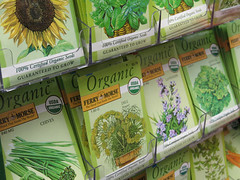
Packages of seeds - flowers & herbs

Spring is a great time to talk about sowing seeds, so this month the 1st – 6th graders (the Cool Disciples) at First United Methodist Church (FUMC in Ann Arbor, MI), are studying a Rotation on the Parable of the Sower.
You can read this parable in Mark 4:1-9.

Time Out. Talk about…What is needed for a seed to grow? A speech bubble

Soil, sun, water, love… Did you know that there is something else that needs growing, that takes just as much care and attention?

Cultivating the soil of a thankful heart.

How does one nurture such a garden? Here’s one idea: Keep a list. Take up a notebook and start a list of the things for which your family is grateful. Jot a thankful every day, perhaps at the family dinner table. (Make putting out the journal be a part of setting the table!)

Time Out. Talk about…What are you thankful for today? A speech bubble

Here are a few from my gratitude journal.

590. Chickadees, waiting for the feeder to be filled.
594. Friends, both old and new.
597. Sunshine (after several days of gray.)
601. Drawer dividers for organizing.
605. Textures on tree bark.
607. A husband who is a great cook.
613. Opportunities for my children that allow them to stretch their wings.

How does your garden gratitude grow?

Where did my list making start? Click on this button…

Button to access the web site: A Holy Experience.

Photo credits:
Click here for info on banner photo (not visible in readers or email).
Seed packages by LollyKnit from Flickr, licensed under: Attribution-Noncommercial-Share Alike 2.0 Generic
Button from A Holy Experience.

What is a parable? What is a sower?

The Sower - a painting by Van GoghThe Bible has been around for a long, long time. It existed even before it was written down! In those days the Bible was passed along as stories; stories told around the campfire at night or where ever people gathered.


Stories have tremendous power.

 
Time Out. Talk about… What do you like best about stories?  A speech bubble

Stories teach us. Have you ever had a story grab your attention, or spark your imagination, or evoke a strong emotion? That’s what stories can do! Jesus was a master storyteller. He often taught using a type of story called a parable.

Time Out. Talk about… Kids: Tell the adults what a parable is.  A speech bubble

(They’ve probably forgotten. If you don’t know, read on!)

Jesus often taught using parables. There are over thirty parables of Jesus found in the Gospels! This month the 1st – 6th graders (the Cool Disciples) at FUMC (First United Methodist Church) in Ann Arbor, MI, are doing a Rotation on the parable known as the “Parable of the Sower.”

A parable is a story that teaches a special lesson with a hidden meaning. The word parable has its origin in the Greek word paraballein, which literally means, “to throw one thing down alongside another.” I’ll bet that when Jesus got in the boat to start teaching the crowd, he looked around and what did he see in the distance? Someone doing some farm work; perhaps someone sowing seed.

Time Out. Talk about… How was seed sown in Jesus’ day?  A speech bubble

Sowing, not to be confused with sewing (which is done with a needle and thread) is another word for planting seed. In first century Palestine, farming was an important occupation. Sowers carried shoulder bags full of seed and scattered the seed by hand, walking along the length and breadth of their fields throwing fistfuls of seed out across the soil. Everyone in the crowd knew farming in this manner. Jesus’ use of this well-known image – a farming technique – helped his listeners understand the less familiar concept that was the hidden portion of the parable. I’ll bet you’re expecting a question about the hidden meaning… you’ll have to wait until next week for that discussion! (Okay, check it out here.)

Our parable is called the “Parable of the Sower” but it could be called the “Parable of Soils.” It chronicles the hand-cast seed as falling on four types of soil. Watch this three minute video which has no words, just music. Watch it once and listen. Watch it again and let your kids tell the story. Enjoy!

(If reading this in an email, you can watch this video on YouTube.)

a blue line


Photo credits:
The Sower, a painting by Vincent van Gogh, is in the Public Domain, via Wikimedia Commons.
Video by RodTheNey, who licensed this under a Creative Commons License.

Are you seeing ads? They are not from me! They are placed by WordPress, who otherwise offers a free platform from which to share lots of good-ness. If you see an inappropriate ad, please report it to support@wordpress.com. Include the URL, the date/time the ad appeared, and a screenshot of the ad.

Workshop Schedule for March 2011

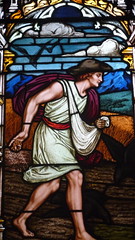
Stain glass window showing a sower

On Sunday mornings, our Cool Disciples (our 1st – 6th graders) experience Rotation Model Sunday’s school, as they learn about Bible stories and concepts through kid-friendly multimedia workshops.

In March, we are studying the Parable of the Sower.

Read about our story in Mark 4:1-9.

Here is the schedule for the next three weeks…

Date Art 1 Art 2 Cooking Newsroom Games Video
Room 212 Room 211 Pine Room Room 215 Room 204 Social Hall
3/13 2nd grade 5th grade 3rd grade 6th grade 4th grade 1st grade
3/20 1st grade 4th grade 2nd grade 5th grade 6th grade 3rd grade
3/27 3rd grade 6th grade 1st grade 4th grade 5th grade 2nd grade

What’s happening in each workshop?

  • We’ll be running two Art Workshops – one for younger students and one for older students. (This must mean we’re doing a really neat project!) Yep! Students will use clay in a unique way to create a “sowing scene” with which they can re-tell the story.
  • In the Cooking Workshop we will continue our theme of using items in unusual ways; students will be playing with their food! They will listen to music and the story being re-told, and formulate a visual interpretation of the Parable of the Sower… using snack foods! (Some eating will be allowed.)
  • In the Newsroom Workshop students will create (and videotape) ads selling products or services that might help us be more open to God’s Word. (Anyone need a Sunday-Morning-Bed-Launcher?)
  • In the Games Workshop students will use their bodies (both to answer questions and to move as game pieces) on a life-sized game board. They’ll hear situations and decide which sort of soil applies.
  • In the Video Workshop students will watch portions of the live-action video The Visual Bible: Matthew. They’ll also explore the meanings of the different soils by voing in a unique manner.

All sorts of curiosities happening this month! Don’t want to miss these workshops!


If you are in the area please join us for the fun learning at First United Methodist Church in Ann Arbor, MI


Photo credits from Flickr: Banner photo (not visible in readers or email) by Pink Sherbert Photography.
Stain glass sower by Jonathan O’Donnell. Both licensed under: Attribution-Noncommercial-Share Alike 2.0 Generic

Look! The Lamb of God!

Asking questions is good. Encourage the asking of questions, even if you don’t know the answers!

A faith that quits questioning, quits growing.

+++++—Rev. J. Douglas Paterson in his “What If” sermon series
+++++“What If Having Questions Were More Important Than Having
+++++ Answers?” (2/6/11)

Here are a couple of questions… but first a bit of background. Our story about John the Baptist is found in all four Gospels. The Gospel according to John (a different John than John the Baptist) includes a picture metaphor.

One day John the Baptist saw Jesus coming toward him and yelled out, “Look, the Lamb of God.” (John 1:36)

Lambs

So if having questions is a way to grow…

Why did John the Baptist call Jesus “the Lamb of God”?

In Jesus’ time, lambs were offered (twice a day) as a sacrifice for people’s sins. An animal’s life — to pay the penalty for sin. Calling Jesus the “Lamb of God” meant that Jesus would take the place of a lamb; Jesus would die to take away our sins.

How did John the Baptist recognize that Jesus was the Messiah?

Wonder together! What questions have your kids asked about this story?


Photo credits: Click here for info on banner photo (not visible in readers or email).
Lambs by A. Roger Davies, who licensed this photo on Flickr under a Creative Commons License.

Dinner table conversation?

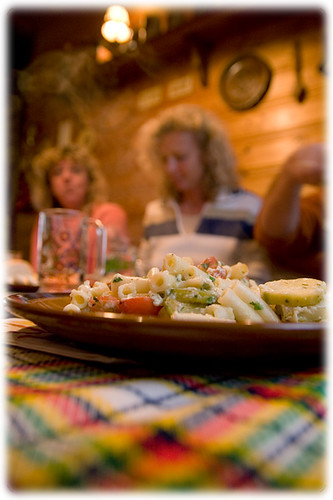
“atA little while back I’d suggested that a way to talk about faith with your kids was to make family dinner a priority. (Click on “family dinner” to read that post.)

Sometimes getting conversation going at the table can be tough, especially for older kids. Here’s an idea:

Before dinner glance at this brief post from “HuffPost Family Dinner Downloads.”

HuffPost? What’s that?

In the words of the editors…

'Every Friday afternoon, just in time for dinner, our editors highlight one of the most compelling news stories of the week — stories that will spark a lively discussion among the whole family.

This particular HuffPost Family Dinner Download happens to be about eating healthy and about one particular retailer (amazingly enough) agreeing to help with that effort especially for folks with limited incomes. Lots of room for various discussion – there are even questions provided to spark conversation!

But where is “faith” in this discussion?

Glad you asked? To tie your discussion to our current Rotation at at FUMC, bring up the question: What did John the Baptist eat?

The answer: locusts and wild honey! (Matthew 3:4) Yum?

Here are some other questions to discuss:

  • Do you suppose people thought John was strange? Why do you think that?
  • Do you suppose that his strange diet (and his strange clothes) were what drew people to him?
  • Oh, so why else did they want to listen to what John the Baptist had to say? And what was it he was saying/doing?
  • John the Baptist baptized with water. What are some ways water gives and sustains life in the world?
  • Why is water a symbol of what God does for us at baptism?

If your children have been baptized, tell them about it. If they haven’t been baptized, discuss baptisms they’ve seen. Enjoy your family dinner!

-------


Photo credits:
Dinner table photo by vizzzual-dot-com, who licensed this photo on Flickr under a Creative Commons License.

John the Baptist preached prepare! Any preparation for us?

A camelJohn the Baptist was an odd character. He lived in the wilderness (in the desert valley of the Jordan River, north of Jerusalem), wore wilderness clothes (camel’s hair) and ate wilderness food (locusts). Even though he led a strange life-style, people still flocked to hear him, which was good, because John had an important, God-appointed job…
A locust

To get people ready!

In between munching on locusts dipped in honey (was that for added flavor?) John told people to “Repent, for the kingdom of heaven has come near” Matthew 3:2. Hundreds of years earlier the Prophet Isaiah had predicted, “Someone is shouting: Clear a path in the desert! Make a straight road for the LORD our God” (Isaiah 40:3). That someone was John the Baptist, making straight roads for God.

The phrase “making straight roads” has an interesting background. When a king planned to tour his dominion, a crew would be sent out ahead to fill in any potholes and knock down any hills in the way! Nothing will impede the way of the king!

John’s make-way, readiness call was referring to peoples behavior. They needed to change their thoughts and actions and return to following God. “He went into all the country around the Jordan, preaching a baptism of repentance for the forgiveness of sins” (Luke 3:3). Repentance can mean to feel sorry for our choices. But John the Baptist wanted people to do more than just apologize for sins; he was also asking them to prepare their hearts for the Lord.

What about us?

Do our hearts need preparation? Jesus is always seeking us out; wanting to have a close, personal relationship with us. He needs our hearts and minds ready to accept that relationship!

What do we need to do to welcome God into our hearts? Discuss these ideas with your family.

  • We think of prayer as talking to God, but it’s also about listening. What are ways to help us quiet ourselves as we prepare to listen for God?
  • Do we feel as though we need to be in a certain location? What would be a small way to recreate that location at home?
  • What can distract us from God? How about TV or sports or sleeping in on Sunday mornings? What will help us remove those distractions?
  • What about “boulders” in the way? Is there some other way we feel we should be spending our time? Is there some past experience that keeps you from letting God in?
  • Can what we expect of God be a hinderance? What are your expectations of God? Perhaps what is needed is to get to know God better?

What are your thoughts on preparing the way for God?
Share them by commenting below. (There’s nothing to join and your email won’t be shown!)


Photo credits (all from Flickr): Banner photo (not visible in readers or email) by Pink Sherbert Photography. Camel by xikita. Locust by Peter Rowley.All licensed under: Attribution-Noncommercial-Share Alike 2.0 Generic

Workshop schedule for January 2011 – John Baptizes Jesus

During the school year, on Sunday mornings each Rotation for our Cool Disciples (our 1st – 6th graders at FUMC in Ann Arbor, MI) includes six workshops. In January, we’ll be studying about John the Baptist, about Jesus’ baptism, and about baptism today.

Read about our story in Matthew 3.
Hint: On this blog you can click on words that are bold and a different color, and you’ll open up an internet site. (In our case, always safe ones!) This link sends you to a site where you can read our Bible passage. Pretty cool, yes?

Here is the schedule of workshops for the next three weeks…

Date Games Art Cooking Drama Storytelling Video
Room 211 Room 212 Pine Room Room 215 Room 204 Social Hall
1/16 2nd grade 5th grade 3rd grade 6th grade 4th grade 1st grade
1/23 1st grade 4th grade 2nd grade 5th grade 6th grade 3rd grade
1/30 3rd grade 6th grade 1st grade 4th grade 5th grade 2nd grade

What’s happening in each workshop?

  • In the Art Workshop students will create molas. Molas are a fabric art form practiced by the Kuna Indians in Panama. Our project will use paper and focus on symbols of baptism.
  • In the Cooking Workshop students will creative edible “locusts” while learning about John the Baptist and the important job that he had. (Do you suppose they will actually eat their creations?!)
  • In the Drama Workshop students will enact the story of John the Baptist preaching “Repent.” They will also enact Jesus’ baptism and they will run through the Baptismal service by baptizing a doll.
  • In the Games Workshop students will participate in a reverse Jeopardy game which will reinforce story details.
  • In the Storytelling Workshop students will enjoy a visit from John the Baptist!
  • In the Video Workshop students will watch portions of the video The Animated Stories from the New Testament: John the Baptist while enjoying popcorn (can’t have a movie without popcorn!)

I wonder which workshop will be the favorite of your child?


Photo credits: Banner photo (not visible in readers or email) – Pink Sherbert Photography on Flickr, licensed under: Attribution-Noncommercial-Share Alike 2.0 Generic

Jesus’ Birth: Mary’s story

A banner for Christmas - Mary and Joseph and baby Jesus
Have you ever noticed how two people can both experience the same event and come away with different memories? It’s the same story, but different perspectives. It can actually enrich the story! Thus, every year our Advent Rotation for our Cool Disciples (our 1st – 6th graders at FUMC in Ann Arbor, MI) takes a different focus.

Last year in December the story of Jesus’ birth was told through the eyes of Isaiah. (That’s right, Isaiah from the Old Testament; 700 years before Jesus was born!) There was the year when our story was from the perspective of the wise men. Previous to that it was the shepherds and angels. This year Mary, Jesus’ mother, takes center stage.

Who was Mary?

She was likely poor and lived in Galilee, a region of the Roman Empire, in a town called Nazareth. We are also told that Mary was “engaged to Joseph” which means she could have been a young teenager; as young as 12 years old, as this is the age at which young women were eligible for “betrothal.” God chose a poor, young girl for an important job! And what a rather unexpected job… to become the mother of Jesus!

Here are some questions to discuss…

+++++for the first part of our story (in Luke 1:26-38):

  • When Mary first saw the angel how do you suppose she felt? Was she scared, surprised or just nonchalant?
  • How did Mary react to the news that she would have a baby boy, name him Jesus, and that he would be our Savior?
  • I wonder why God would choose such a young woman to be Jesus’ mother?
  • If God asked you to do something that would be very challenging, do you suppose that you would say as Mary did, “I am the Lord’s servant; may it happen to me as you have said?” (Luke 1:38)
  • Tell about a time when you felt called by God to do something you weren’t sure about doing; were you afraid and had questions but then ready to accept God’s plan?

May you enjoy pondering these “talk time” questions as you nurture and support one another in your faith journeys!